
Methane and natural gas are two terms that often appear side by side in conversations about energy, climate, and infrastructure. They are closely related, but they are not the same thing. Understanding the distinction matters whether you are a pipeline operator, an energy professional, or simply someone trying to make sense of the headlines about fossil fuels and emissions. This article breaks down what each term means, how they differ, and why the distinction is increasingly important in a world focused on reducing greenhouse gas emissions.
What is methane and where does it come from?
Methane is a chemical compound made up of one carbon atom bonded to four hydrogen atoms, giving it the molecular formula CH4. It is the simplest hydrocarbon and, at room temperature and normal atmospheric pressure, exists as a colorless, odorless gas. Methane is highly flammable, which makes it a valuable energy source, but it is also a potent greenhouse gas, which makes uncontrolled releases a serious environmental concern.
Methane occurs naturally in a wide range of settings. It is produced by the decomposition of organic matter in oxygen-free environments, a process known as anaerobic digestion. This happens in wetlands, rice paddies, the digestive systems of livestock, and landfill sites. Methane also forms deep underground over millions of years as organic material is subjected to heat and pressure, which is how fossil fuel deposits of natural gas and coal come to contain it. Volcanic activity and ocean sediments release smaller quantities as well.
Human activity has significantly increased the amount of methane entering the atmosphere. The main sources include livestock farming, landfills, rice cultivation, and the extraction, processing, and distribution of fossil fuels. Leaks from gas pipelines and infrastructure are a particularly relevant source for the energy industry.
What is natural gas and what is it made of?
Natural gas is a fossil fuel mixture extracted from underground geological formations, often found alongside oil deposits or in dedicated gas fields. It is not a single compound but a blend of several gases, with methane making up the dominant share. Depending on the source, natural gas typically contains between 70% and 90% methane by volume, with the remainder consisting of ethane, propane, butane, carbon dioxide, nitrogen, hydrogen sulfide, and trace amounts of other gases.
Before natural gas reaches homes and businesses through pipeline networks, it undergoes processing to remove impurities and heavier hydrocarbons. The resulting product, often called pipeline-quality gas or transmission gas, is predominantly methane. This processed form is what flows through the extensive high-pressure infrastructure that crosses continents and supplies energy to millions of consumers.
Natural gas is used for heating, electricity generation, industrial processes, and increasingly as a fuel for vehicles. It is often described as the cleanest of the fossil fuels because burning it produces less carbon dioxide per unit of energy than coal or oil. However, that environmental advantage is undermined when methane leaks occur during extraction, transport, or distribution, since unburned methane is far more damaging to the climate than the CO2 produced by burning it.
What is the difference between methane and natural gas?
The core difference is straightforward: methane is a specific chemical compound, while natural gas is a mixture of gases in which methane is the primary component. Thinking of it in everyday terms, methane is to natural gas what pure alcohol is to wine. Wine contains alcohol, but it also contains water, sugars, acids, and other compounds. Similarly, natural gas contains methane, but also ethane, propane, and various impurities.
In practical terms, this distinction matters in several ways:
- Composition: Methane is always CH4, a single molecule. Natural gas varies in composition depending on its geological origin and how it has been processed.
- Purity: Biomethane and synthetic methane can be nearly pure CH4, whereas raw natural gas from a wellhead contains a range of other compounds.
- Measurement: When scientists and regulators measure greenhouse gas emissions, they focus specifically on methane (CH4) because of its climate impact. When energy companies measure fuel value, they work with the full natural gas mixture.
- Regulation: Environmental regulations such as the EU Methane Regulation target methane emissions specifically, not natural gas as a whole, because it is the CH4 component that drives climate warming.
In everyday language, the two terms are often used interchangeably, particularly when referring to pipeline gas. But in technical, scientific, and regulatory contexts, precision matters. A natural gas pipeline carries a mixture, but the emissions that need to be detected and measured are specifically methane.
Why does methane matter for climate change?
Methane is a greenhouse gas with a global warming potential roughly 80 times greater than carbon dioxide over a 20-year period. While it breaks down in the atmosphere more quickly than CO2, its short-term warming effect is substantial. This means that even relatively small leaks from gas infrastructure can have a disproportionate impact on the climate compared to the CO2 emissions from burning the same gas.
The energy sector is one of the largest human-caused sources of methane emissions globally. Leaks from pipelines, compressor stations, storage facilities, and processing plants all contribute. Reducing these fugitive emissions is widely recognized as one of the fastest and most cost-effective ways to slow near-term climate warming, since the gas that escapes has both an environmental cost and a commercial value that is simply being lost into the atmosphere.
This is why leak detection and repair programs have become a central pillar of climate policy for the oil and gas industry. Identifying and fixing even small leaks delivers a double benefit: it reduces greenhouse gas emissions and recovers gas that would otherwise be wasted.
How is methane detected in gas pipelines?
Detecting methane leaks in gas pipeline networks is a technical challenge, particularly for underground infrastructure spread across vast distances. Several approaches exist, ranging from ground-level inspection to airborne surveys.
Traditional methods include handheld gas detectors carried by technicians walking along pipeline routes, vehicle-mounted sensors, and optical gas imaging cameras. These tools are effective for close-range inspection but are slow when applied to long-distance transmission pipelines that may stretch hundreds or thousands of kilometers.
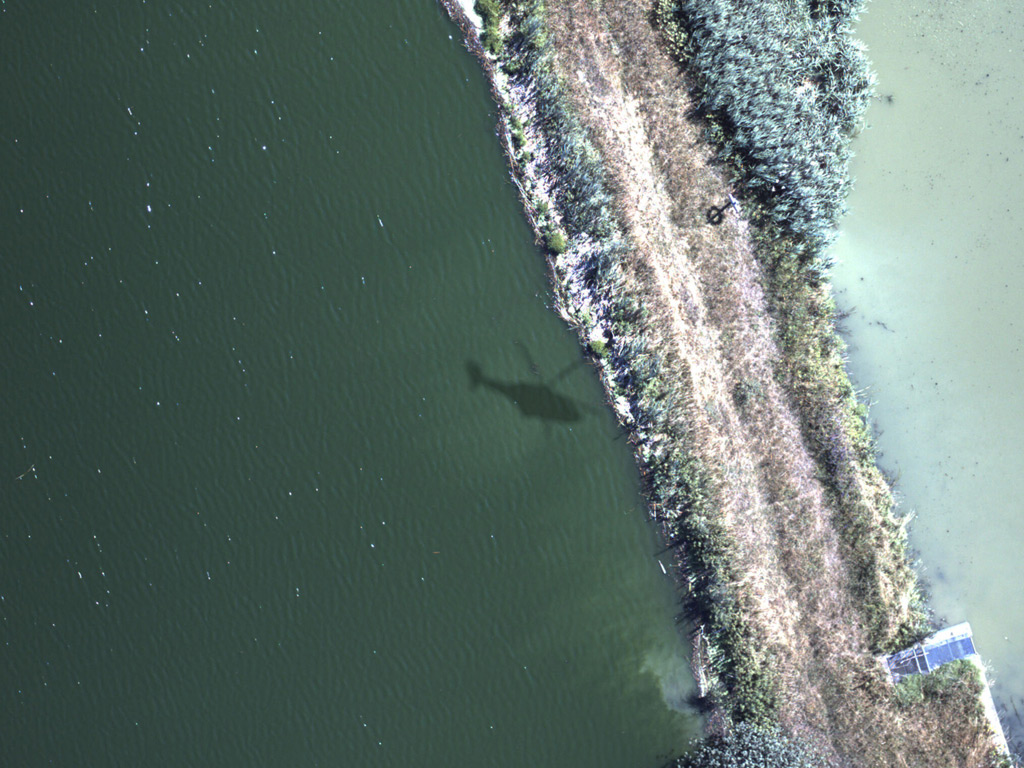
Airborne detection has become increasingly important for large-scale pipeline surveys. Helicopter-mounted laser systems can cover significant distances quickly and detect methane concentrations from altitude. The most advanced systems use a technique called Differential Absorption LIDAR, or DIAL, which emits laser pulses at two different wavelengths. Because methane absorbs light at specific wavelengths, the difference in the reflected signals reveals the presence and concentration of the gas below the aircraft.
A critical technical point for airborne detection is that underground leaks do not always surface directly above the leak point. Research from institutions including METEC and the Engler-Bunte Institute shows that gas travels through soil, and the resulting plume at the surface can be displaced laterally from the actual leak. This means effective aerial inspection must cover a measurement grid extending at least 10 meters on either side of the pipeline centerline, not just a single line of measurement points directly above the pipe. Spatial resolution must be better than 2 meters to reliably identify the source area.
Detection sensitivity is equally important. At the smallest physically possible leak in a steel pipe operating above 5 bar, surface methane concentrations of approximately 300 parts per million have been measured in certification tests. Any credible aerial detection system must be capable of reliably identifying concentrations at this level under real operating conditions, including varying wind speeds and flight altitudes.
What are the regulations for methane emissions in Europe?
Europe has moved decisively to regulate methane emissions from the energy sector. The EU Methane Regulation, formally known as Regulation EU 2024/1787, entered into force on 4 August 2024 as part of the European Union’s Fit for 55 climate package. It is the first piece of EU legislation specifically targeting direct methane emissions from the oil, gas, and coal sectors.
The regulation introduces a structured framework for leak detection and repair (LDAR) across Europe, with a staged compliance timeline running through to 2030. Key milestones include:
- The first reporting cycle began in 2025, with operators required to initiate LDAR plans and complete their first Type-2 survey by August 2025.
- By August 2028, all assets within the EU must reach OGMP 2.0 Level 5, the highest tier of the Oil and Gas Methane Partnership reporting framework.
- By August 2030, importers must demonstrate that imported gas meets methane intensity limits set by the European Commission.
The regulation distinguishes between two inspection classes. Type-1 inspections require a detection threshold of 17 grams per hour, a level achievable with optical gas imaging cameras and standard handheld equipment. Type-2 inspections set a stricter threshold of 5 grams per hour, demanding more sophisticated technology. In return for meeting this higher sensitivity standard, operators benefit from a longer inspection interval of once every three years for underground pipelines, creating a clear economic incentive to invest in better detection technology.
Until the forthcoming Implementing Act is formally adopted, Article 14(7) of the regulation requires operators to use the best available technologies and detection techniques. This interim standard already rewards systems that hold rigorous third-party certification.
How ADLARES helps with methane and natural gas pipeline inspection
At ADLARES, we specialize in airborne methane detection for gas pipeline operators across Europe. Our CHARM technology is the world’s only DVGW-certified aerial gas remote detection system and is fully compliant with the EU Methane Regulation Type-2 requirements, giving operators a clear and defensible path to regulatory compliance.
Here is what we bring to pipeline inspection programs:
- High sensitivity at speed: Our helicopter-mounted DIAL system detects leaks from as little as 150 liters per hour at flight speeds of up to 180 km/h, covering large pipeline networks efficiently.
- Full grid coverage: We scan a swath across the entire pipeline corridor, not just a line above the pipe, ensuring underground plumes are captured even when they surface away from the leak point.
- Verified performance: CHARM is independently certified to detect surface concentrations of 300 ppm in 2×2 meter areas under all certified flight altitudes and wind conditions.
- Type-2 compliance: Our surveys satisfy the EU Methane Regulation Type-2 inspection standard, qualifying operators for the three-year inspection interval on underground pipelines.
- Secure results delivery: Survey findings are delivered through a secure Web GIS platform, accessible on desktop and mobile, so your team can verify and act on gas indications without delay.
With over 250,000 km of gas pipelines inspected across Europe since 2008, we have the experience and the technology to support your LDAR program. Explore our pipeline inspection services or get in touch with our team to discuss how we can help you meet your methane monitoring obligations.
Dieser Inhalt wurde mithilfe von KI erstellt und kann Fehler enthalten.