
Methane slip is a term that appears more and more frequently in conversations about natural gas infrastructure, climate policy, and emissions compliance. Yet despite its growing relevance, there is still a lot of confusion about what it actually means, how it differs from related concepts, and why it matters so much to grid operators and regulators alike. Whether you are managing a transmission network or simply trying to understand the emissions landscape around gas infrastructure, this guide breaks down the essentials clearly and practically.
What is methane slip and why does it matter?
Methane slip refers to the unintended release of methane gas into the atmosphere without combustion. The term originally came from the world of gas engines, where unburned methane passes through the combustion process and exits through the exhaust. Over time, the term has broadened in common usage to describe any scenario where methane escapes a system without being used or flared, including losses from pipelines, compressor stations, and other gas infrastructure.
Why does it matter? Methane is a potent greenhouse gas. Over a 20-year period, it traps significantly more heat per unit than carbon dioxide. Even relatively small volumes of methane released into the atmosphere can have a disproportionate climate impact. For the natural gas sector, this creates both a reputational and a regulatory challenge: the climate credentials of natural gas depend heavily on keeping methane losses to a minimum across the entire supply chain.
Where does methane slip most commonly occur?
Methane slip and unintended methane releases occur across the entire gas value chain, but certain points are more prone to losses than others.
- Gas engines and turbines: In power generation and compression, unburned methane can exit through the exhaust, particularly in older or poorly maintained equipment.
- Compressor stations: Seals, valves, and rotating equipment at compressor stations are common sources of fugitive methane emissions.
- Underground transmission pipelines: Micro-defects, corrosion, and joint failures in buried pipelines allow methane to migrate through the soil and reach the surface.
- Above-ground infrastructure: Pressure regulation stations, metering points, and flanged connections are all potential emission sources.
- Distribution networks: Lower-pressure distribution pipes, especially older cast-iron or polyethylene networks in urban areas, can release methane through permeable materials or deteriorated joints.
Each of these locations presents a different detection challenge. Underground pipeline leaks are particularly difficult because methane migrates through soil before reaching the surface, and the emission point above ground is not always directly above the physical defect in the pipe.
How does methane slip happen in gas pipelines?
In the context of gas transmission pipelines, methane slip happens when the integrity of the pipe wall or its joints is compromised. At high operating pressures, even a small defect creates a pressure-driven pathway for gas to escape. The methane then moves through the surrounding soil, with the plume widening as it travels upward. Research by institutions such as METEC (Methane Emissions Technology Evaluation Center) and the Engler-Bunte Institute has confirmed that the surface emission area is often broader than the defect location below ground, and the visible signal at the surface may appear some distance from the actual leak point.
An important physical reality governs this process: in steel pipelines operating above 5 bar, the minimum physically possible leak rate is approximately 150 litres per hour, equivalent to around 110 grams of methane per hour. This is not a regulatory threshold but a structural constraint. The material properties of steel and the pressure gradient simply do not allow smaller defects to form and sustain themselves at these pressures. Any detection system claiming to find leaks below this physical minimum in high-pressure steel pipelines is detecting signals that cannot correspond to real pipeline defects.
What is the difference between methane slip and fugitive emissions?
These two terms are often used interchangeably, but they describe slightly different things.
Methane slip, in its strictest sense, refers to unburned methane passing through a combustion or processing system, most commonly in gas engines. The methane enters the system as fuel but exits without reacting, effectively slipping past the process.
Fugitive emissions is a broader category that covers all unintended releases of gas from infrastructure, including leaks from pipelines, valves, flanges, seals, and fittings. Fugitive emissions do not require a combustion context. A leaking flange on a transmission pipeline is a fugitive emission source, not methane slip in the technical sense.
In practice, the distinction matters most in regulatory and engineering contexts. When regulators and operators discuss pipeline methane detection and LDAR programmes, they are primarily addressing fugitive emissions from infrastructure. When equipment manufacturers discuss methane slip, they are typically referring to combustion efficiency in engines. The broader public conversation about natural gas and climate often uses both terms loosely to mean any unintended methane release, which is worth keeping in mind when reading policy documents or media coverage.
How is methane slip detected and measured?
Detecting methane emissions from gas infrastructure requires methods that can cover large areas reliably and with sufficient sensitivity to catch real leaks at the earliest opportunity. Several approaches exist, each suited to different parts of the network.
- On-foot surveys: Technicians walk pipeline routes with handheld flame ionisation detectors or laser-based instruments. This is thorough but slow and expensive for long routes.
- Vehicle-based surveys: Instruments mounted on vehicles can cover roads above pipeline corridors, but they are limited to accessible routes and cannot cover the full width around a pipeline.
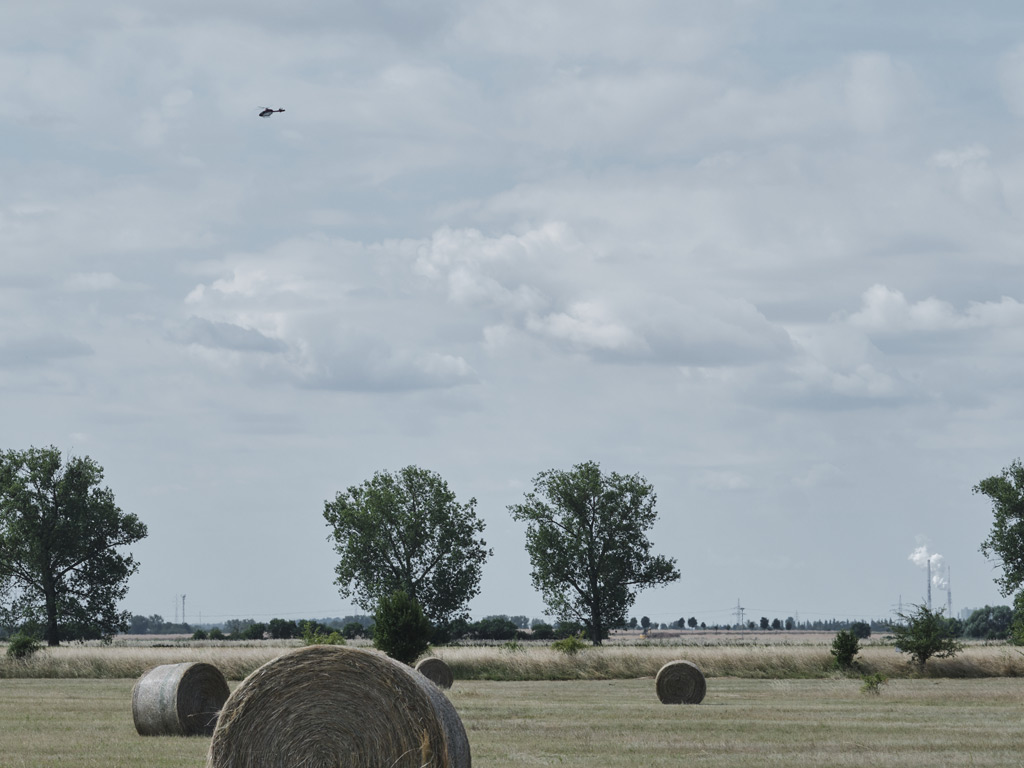
- Aerial surveys: Helicopter or drone-based systems can cover large network sections quickly, scanning a wide swath on either side of the pipeline. For reliable detection of underground leaks, the measurement grid must cover at least 10 metres either side of the pipeline centreline at a spatial resolution better than 2 metres, because underground plumes widen and do not always surface directly above the pipe.
- Satellite-based monitoring: Useful for detecting large emission events at a regional scale, but current satellite technology lacks the sensitivity and spatial resolution needed to reliably detect the small leaks that occur at individual pipeline defects.
Measurement and quantification are equally important. Detecting a signal is only the first step. Operators also need to understand the emission rate at the source, which typically requires ground-level investigation after an aerial or vehicle survey has flagged an anomaly. This two-step approach, surface screening followed by source confirmation, is now embedded in EU regulatory requirements.
What regulations apply to methane slip from gas infrastructure?
The regulatory landscape for methane emissions from gas infrastructure has changed significantly in recent years. The EU Methane Regulation (Regulation EU 2024/1787), which entered into force on 4 August 2024 as part of the European Union’s Fit for 55 climate package, is the most significant piece of legislation affecting European gas operators today.
The regulation requires Transmission System Operators to move away from estimate-based emission accounting and toward direct measurement at individual sources. This is known as source-level reporting, and it forms the foundation of the OGMP 2.0 Level 5 standard, which all EU assets must achieve by August 2028. A staged compliance timeline applies:
- The first reporting cycle began in 2025, with operators required to have an LDAR plan in place and the first Type-2 LDAR survey completed by August 2025.
- By January 2027, importers must demonstrate that contracts concluded or renewed after August 2024 cover gas subject to equivalent monitoring and reporting requirements.
- By August 2028, all assets must reach OGMP 2.0 Level 5.
- By August 2030, importers must show that imported gas meets a methane intensity limit set by the European Commission.
The regulation defines a two-step LDAR methodology for underground pipelines. Step 1 is surface screening to identify where ground investigation is warranted. Step 2 is source confirmation after excavation or bar-hole drilling, where the repair obligation is triggered if emissions exceed 1,000 ppm or 5 grams per hour at the source. Until a forthcoming Implementing Act sets specific detection thresholds for aerial Stage 1 screening, Article 14(7) of the regulation requires operators to use the best available technologies and detection techniques. Operators who want to learn more about EU Methane Regulation compliance for gas networks will find that technology certification plays a central role in demonstrating that this standard is met.
How ADLARES helps with methane slip and pipeline emissions detection
We at ADLARES have spent over two decades developing and operating the technology that gas grid operators need to detect, locate, and report methane emissions from their networks. Our CHARM® system is the world’s only DVGW-approved airborne gas remote detection technology, and it is specifically designed to meet the requirements that modern regulations and physical reality demand.
- Wide-area grid scanning: CHARM® scans a full measurement grid across the pipeline corridor, covering the area on either side of the centreline where underground plumes actually surface, not just a single line above the pipe.
- Verified sensitivity: Our system is independently verified to detect surface methane concentrations of 300 ppm in a 2 by 2 metre area, well above the sensitivity needed to reliably identify real leaks at the physical minimum leak rate of 150 litres per hour in high-pressure steel pipelines.
- EU Methane Regulation Type-2 compliance: CHARM® meets the Type-2 inspection requirements of EU Regulation 2024/1787, supporting operators in meeting their LDAR obligations and progressing toward OGMP 2.0 Level 5.
- Efficient Step 1 screening: Our helicopter surveys cover large network sections quickly, delivering GPS-tagged anomaly reports that direct ground teams to specific locations for Step 2 investigation, reducing the total route length that requires on-foot inspection.
- Secure results delivery: Survey findings are delivered through a secure Web GIS platform, accessible on desktop and mobile, so your teams can act on results immediately.
With over 250,000 kilometres of gas pipelines inspected across Europe, we bring proven operational experience to every survey we conduct. If you want to understand how our airborne methane detection services can support your LDAR programme and regulatory compliance, get in touch with our team today.
Dieser Inhalt wurde mithilfe von KI erstellt und kann Fehler enthalten.