
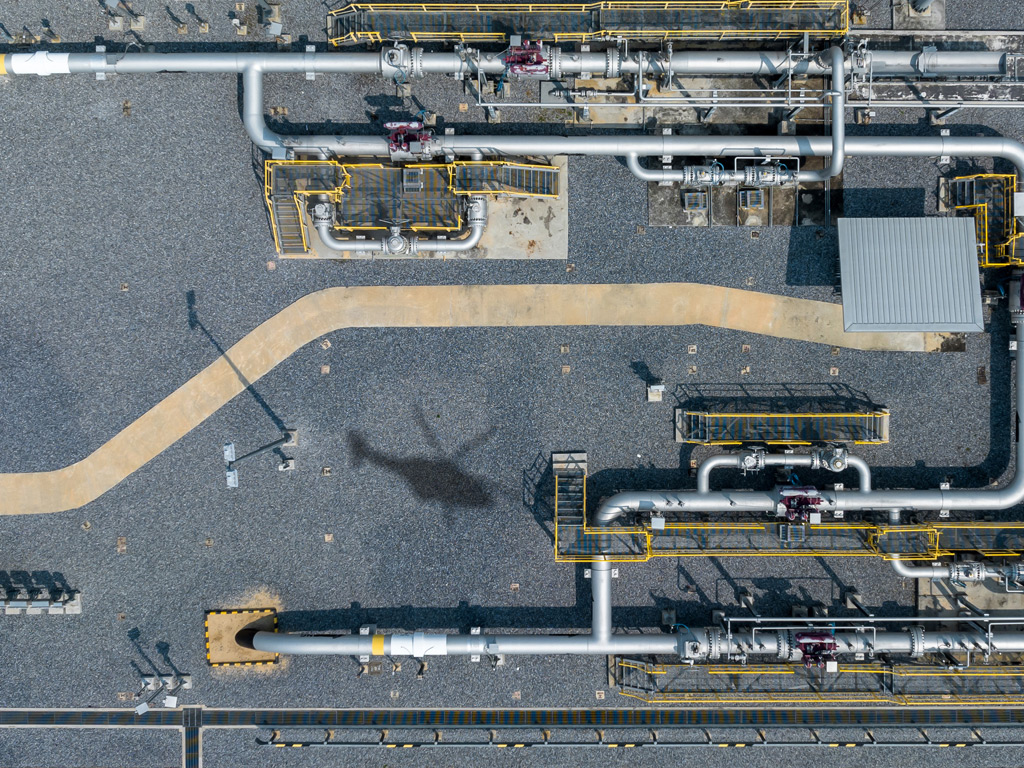
Yes, LDAR programs can meaningfully reduce both methane emissions and operational costs for gas network operators. By systematically identifying and repairing leaks before they escalate, operators cut fugitive emissions, avoid regulatory penalties, and reduce gas losses that directly affect the bottom line. The sections below explain how these programs work, what regulations require, and which inspection methods deliver the best results.
How much methane do gas pipelines actually leak?
Gas pipelines leak methane continuously through small defects in joints, seals, valves, and aging pipe materials. While individual leaks are often too small to detect without specialised equipment, their cumulative effect across thousands of kilometres of infrastructure adds up to a significant volume of lost gas and a measurable contribution to greenhouse gas emissions.
The scale of the problem varies by network age, material, and operating pressure. Older cast iron and unprotected steel distribution mains tend to show higher leak rates than modern polyethylene pipes. High-pressure transmission pipelines carry more gas per leak event, meaning even a small defect can result in substantial losses. Across Europe’s extensive gas network, the combined fugitive emissions from transmission and distribution infrastructure represent a real environmental and commercial concern that regulators and operators alike can no longer overlook.
What makes methane particularly significant is its potency as a greenhouse gas. Over a 20-year period, methane traps far more heat than carbon dioxide, which means even relatively small pipeline leaks carry an outsized climate impact. This is one of the core reasons leak detection and repair has moved from a best practice to a legal obligation.
How do LDAR programs work in gas pipeline operations?
Leak Detection and Repair (LDAR) programs are structured inspection regimes that systematically survey gas infrastructure, identify emission sources, and schedule repairs based on leak severity. In pipeline operations, LDAR combines regular surveys with a documented repair and verification process to ensure leaks are found, fixed, and confirmed as resolved.
A typical LDAR program for gas pipelines involves the following steps:
- Survey planning: Define the pipeline segments to be inspected, set inspection frequencies based on regulatory requirements and risk profiles, and select appropriate detection methods.
- Leak detection survey: Conduct the physical inspection using ground-based, vehicle-mounted, or airborne detection technology to identify methane indications along the route.
- Grading and prioritisation: Classify detected leaks by severity so repair teams can prioritise the most significant emissions first.
- Repair and follow-up: Carry out repairs within the timeframes required by regulation or internal policy, then re-survey to confirm the leak has been resolved.
- Reporting and documentation: Record all survey results, repair actions, and verification data for regulatory reporting and internal performance tracking.
Modern LDAR programs increasingly rely on digital platforms to manage this workflow. Survey results delivered through a Web GIS platform allow operators to visualise leak indications on a map, track repair status, and generate compliance reports efficiently.
What does the EU Methane Regulation require from gas operators?
EU Regulation 2024/1787 requires gas transmission and distribution operators to conduct regular LDAR surveys across their infrastructure, report methane emissions transparently, and repair detected leaks within defined timeframes. Non-compliance can result in fines of up to 20% of annual turnover, making adherence a commercial priority as well as a legal one.
The regulation introduces specific requirements that directly affect how operators plan and resource their inspection programs. Notably, it shortens inspection intervals compared to previous national standards, meaning some operators will need to survey their networks significantly more frequently than before. For operators managing hundreds or thousands of kilometres of pipeline, this creates a real capacity challenge with existing ground-based inspection methods.
The regulation also distinguishes between equipment types for compliance purposes. Underground equipment, for example, must meet Type 2 sensitivity requirements, which demand detection technology capable of identifying very low leak rates. This level of sensitivity is not achievable with all inspection methods, which is why technology selection is a central compliance consideration for operators preparing their 2026 LDAR programs.
Can LDAR surveys lower operational costs for network operators?
Yes, well-executed LDAR surveys reduce operational costs by preventing small leaks from becoming large, expensive failures and by recovering the commercial value of gas that would otherwise be lost to the atmosphere. The cost of a structured inspection program is typically far lower than the combined cost of undetected leaks, emergency repairs, and regulatory penalties.
The financial case for LDAR breaks down into several distinct areas:
- Gas loss recovery: Every cubic metre of methane that escapes through an undetected leak is gas the operator has already paid for but cannot sell. Systematic leak detection directly reduces these losses.
- Avoiding emergency repairs: Small leaks that go undetected can develop into larger failures requiring costly emergency interventions, excavation, and service interruptions. Early detection keeps repair costs manageable.
- Regulatory penalty avoidance: With fines under the EU Methane Regulation reaching up to 20% of annual turnover, the cost of non-compliance vastly exceeds the investment in a compliant LDAR program.
- Survey efficiency: Faster inspection technologies reduce the labour and time costs associated with covering large pipeline networks, particularly for operators with extensive rural or transmission infrastructure.
What’s the difference between airborne and ground-based LDAR methods?
The key difference between airborne and ground-based LDAR methods is coverage speed and scale. Airborne systems can survey hundreds of kilometres of pipeline per day at speeds of up to 180 km/h, while ground-based methods require technicians to walk or drive the route, covering far less distance in the same time. For large networks, this difference in throughput has a direct impact on both cost and compliance feasibility.
Ground-based LDAR methods
Ground-based inspection involves technicians using handheld or vehicle-mounted gas detectors to survey pipelines at close range. This approach offers high spatial precision and works well for urban distribution networks where access is straightforward and leak locations need to be pinpointed accurately for repair crews. However, it is labour-intensive and slow, making it difficult to scale across long-distance transmission routes or meet tightened inspection intervals without significantly increasing headcount.
Airborne LDAR methods
Airborne gas detection uses laser-based sensors mounted on helicopters or aircraft to scan pipelines from above. Technologies such as Differential Absorption LIDAR (DIAL) can detect methane at very low concentrations, even at survey speeds that would make ground-based detection impractical. Airborne surveys are particularly well-suited to transmission pipelines running through rural or difficult terrain, where ground access is limited and the distances involved make walking surveys uneconomical. Survey results are typically delivered through digital platforms that allow operators to review findings remotely and plan follow-up actions without delay.
How often should gas pipelines be inspected under an LDAR program?
Under the EU Methane Regulation, inspection frequencies depend on pipeline type, operating pressure, and equipment category. Transmission pipelines and high-pressure distribution mains generally require more frequent surveys than lower-pressure local distribution networks. In practice, the regulation has shortened intervals compared to previous national standards, and operators should review their current schedules against the updated requirements to confirm they remain compliant in 2026 and beyond.
As a general principle, higher-risk pipeline segments warrant more frequent inspection. Factors that increase inspection priority include older pipe materials, known corrosion risk, proximity to populated areas, and previous leak history. A risk-based approach to scheduling allows operators to allocate inspection resources efficiently while ensuring the segments most likely to develop leaks receive the attention they need.
The practical challenge for many operators is that shorter intervals, combined with larger network footprints, require inspection technologies that can keep pace. Ground-based methods that were sufficient under previous inspection regimes may no longer be able to cover the required distance within the new timeframes without significant additional resource investment.
How ADLARES supports your LDAR compliance and cost reduction goals
We help gas transmission and distribution operators meet their LDAR obligations efficiently, at scale, and with the sensitivity the EU Methane Regulation demands. Our CHARM® airborne gas detection technology is the world’s only DVGW-approved gas remote detection system, and it has been used to inspect over 250,000 km of gas pipelines across Europe since entering commercial service in 2008.
Here is what working with us delivers in practice:
- High-speed, large-scale surveys: CHARM® operates at up to 180 km/h, enabling operators to cover extensive pipeline networks within tight inspection windows.
- EU Methane Regulation Type 2 compliance: Our technology detects leakage rates from 150 l/h, meeting the sensitivity requirements for underground equipment under the regulation.
- Actionable digital results: Survey findings are delivered through a secure Web GIS platform, accessible on desktop and mobile, so your team can verify indications and plan repairs without delay.
- Proven track record: With over two decades of operational experience and surveys conducted for major grid operators across Europe, we bring both technical capability and deep industry knowledge to every project.
If you are reviewing your LDAR program ahead of your next inspection cycle, we would be glad to discuss how our airborne leak detection services can fit your network and compliance requirements. Get in touch with our team to find out more.
Dieser Inhalt wurde mithilfe von KI erstellt und kann Fehler enthalten.