
Tunable diode laser absorption spectroscopy, or TDLAS, has become one of the most discussed sensing technologies in the world of gas detection. As pipeline operators and energy companies face tightening environmental regulations, understanding how TDLAS works and where it fits into modern inspection programmes has never been more relevant. This article breaks down the science behind TDLAS, compares it to related technologies like DIAL, and explains how it is being applied across gas infrastructure today.
What is TDLAS and what does it stand for?
TDLAS stands for Tunable Diode Laser Absorption Spectroscopy. It is an optical sensing technique that uses a laser diode whose output wavelength can be precisely tuned to match the absorption fingerprint of a specific gas molecule, such as methane. When the laser light passes through air containing that gas, the molecules absorb energy at the target wavelength, and the system measures how much light is lost. That reduction in signal intensity directly indicates the concentration of the gas present.
The „tunable“ part is what makes TDLAS so powerful. By sweeping the laser across a narrow wavelength range, the sensor can lock onto a very specific absorption line belonging to the target molecule while ignoring interference from other gases. This selectivity gives TDLAS a significant advantage in environments where multiple gases may be present simultaneously. The technique is entirely non-contact, meaning the sensor never needs to physically touch the gas source to detect it.
How does TDLAS detect methane in pipelines?
In a typical TDLAS setup for pipeline inspection, the laser beam is projected toward a surface or through an open air path. Methane molecules in the beam’s path absorb light at characteristic near-infrared or mid-infrared wavelengths, most commonly around 1.65 micrometres or 3.3 micrometres, depending on the system design. A photodetector on the other side of the optical path, or one that uses reflected light from a surface, records the returning signal. The difference between the emitted and received light intensity is processed to calculate a column-integrated methane concentration, typically expressed in units of parts per million times metres (ppm·m).
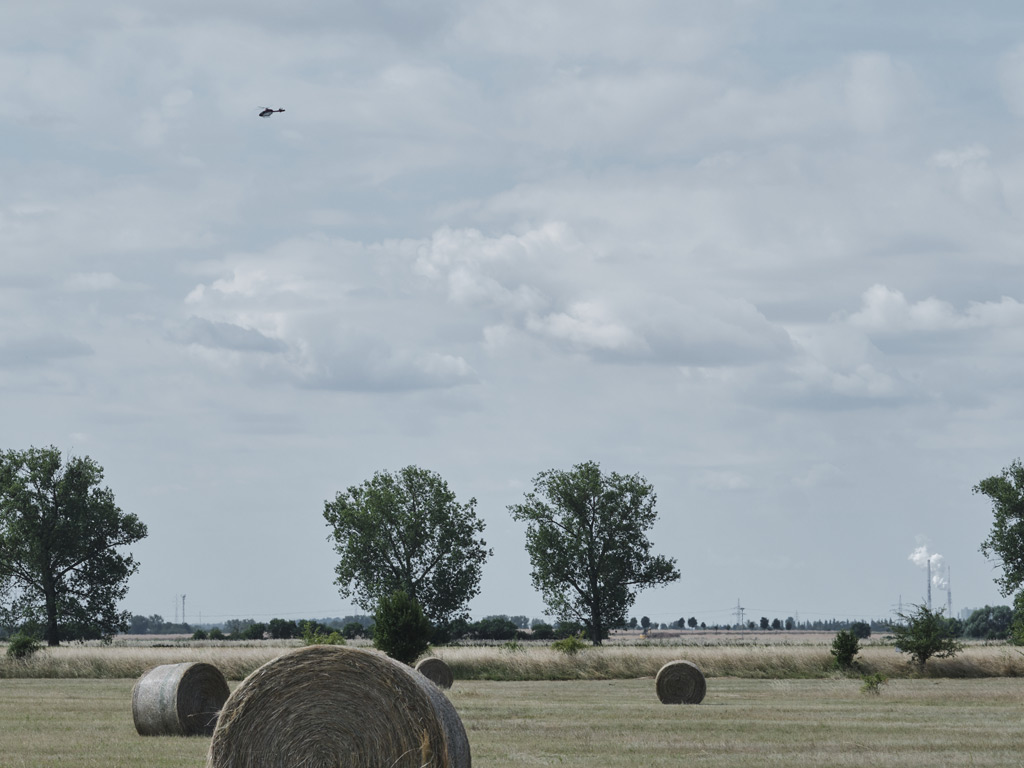
For pipeline surveys, this means a sensor can be mounted on a vehicle or aircraft and flown or driven along a pipeline route. As the sensor scans the ground below, any methane seeping up from a leak in the pipe creates an elevated concentration reading in the beam path. The system logs the GPS coordinates of the anomaly, giving operators a precise location to investigate further. This approach transforms a slow, manual inspection process into a fast, high-coverage survey that can cover hundreds of kilometres in a single day.
What is the difference between TDLAS and DIAL?
While TDLAS and Differential Absorption LIDAR (DIAL) both rely on laser absorption by gas molecules, they differ significantly in design, range, and application scale. TDLAS typically operates along a fixed or short-range optical path, either between a transmitter and a dedicated receiver, or using a retroreflector. It is well suited to point measurements or short transect surveys and is commonly found in handheld detectors, vehicle-mounted sensors, and some stationary monitoring systems.
DIAL, by contrast, is a long-range active remote sensing technique. It emits two laser pulses at slightly different wavelengths, one tuned to a methane absorption line and one tuned off it, and measures the backscattered light from the atmosphere or ground surface. By comparing the return signals from the two wavelengths, the system calculates the methane column concentration across the full beam path. Because DIAL uses backscattered light rather than a fixed receiver, it can operate at much greater distances and does not require any ground infrastructure along the survey route.
The key practical difference is survey scale. TDLAS excels at close-range, high-precision measurements, while DIAL is designed for wide-area, airborne methane monitoring at speed. For inspecting long-distance transmission pipelines across varied terrain, DIAL-based systems offer a coverage and sensitivity combination that TDLAS systems operating from ground level simply cannot match.
How sensitive is TDLAS at detecting small gas leaks?
Sensitivity varies considerably between TDLAS implementations depending on the wavelength band used, the optical path length, and the signal processing algorithms applied. Near-infrared TDLAS systems, which are compact and low-cost, typically achieve detection limits in the range of a few ppm·m. Mid-infrared systems, which target stronger methane absorption bands around 3.3 micrometres, can achieve detection limits well below 1 ppm·m, making them considerably more sensitive.
To put these numbers in practical context, a small pipeline leak releasing methane into the soil and atmosphere will typically produce surface concentrations far above the detection threshold of a well-designed system, even under moderate wind conditions. However, sensitivity alone does not determine whether a leak is found. Survey speed, spatial resolution, and the ability to operate under real-world weather conditions all affect whether a detection system performs in the field as well as it does in a laboratory. This is why independent field certification under standardised conditions is a more meaningful benchmark than laboratory sensitivity figures alone. For airborne pipeline inspection services, field-verified performance under realistic operating conditions is the standard that matters for regulatory compliance.
What are the advantages of TDLAS over traditional inspection methods?
Traditional pipeline leak detection methods, such as on-foot surveys with flame ionisation detectors or manual bar-hole sampling, are labour-intensive, slow, and limited in the area they can cover in a given time. TDLAS-based systems offer several meaningful advantages over these approaches.
- Non-contact detection: The sensor never needs to be placed directly over a leak source, reducing both safety risk and the need for ground access.
- Speed: Vehicle-mounted or airborne TDLAS systems can survey pipeline routes far faster than walking crews, covering ground that would take weeks on foot in a matter of hours.
- Continuous data capture: Rather than taking spot measurements at discrete points, TDLAS systems record data continuously along the survey path, reducing the chance of missing a leak between sampling locations.
- Selectivity: The wavelength-specific nature of TDLAS means the sensor responds to the target gas and not to background interference, reducing false positives.
- Digital output: Modern TDLAS systems produce GPS-tagged, timestamped data records that integrate directly into GIS platforms and LDAR reporting workflows, simplifying compliance documentation.
That said, no single technology covers every inspection scenario. TDLAS works best when combined with a structured LDAR programme that includes follow-up ground investigation at identified anomaly locations, as required under frameworks like the EU Methane Regulation.
Where is TDLAS technology used in gas infrastructure monitoring?
TDLAS and related laser absorption techniques are deployed across a wide range of gas infrastructure applications. The most common include:
- Transmission pipeline surveys: Long-distance natural gas pipelines are a primary application, where the need to cover hundreds or thousands of kilometres makes speed and coverage critical.
- Distribution network inspection: Urban and suburban gas distribution networks, where pipelines run close to buildings and roads, benefit from fast screening to prioritise ground investigation teams.
- Compressor stations and metering facilities: Above-ground infrastructure with numerous potential leak points, such as valves, flanges, and seals, can be surveyed rapidly using TDLAS-based optical scanning.
- Landfill and industrial site monitoring: Sites that emit methane as a byproduct of biological or industrial processes are increasingly subject to emission quantification requirements, and laser-based sensing provides a practical way to map and measure those emissions.
- Storage facilities: Underground gas storage sites and LNG terminals require regular monitoring for fugitive emissions, and remote sensing reduces the need for personnel to enter potentially hazardous zones.
As the EU Methane Regulation tightens inspection requirements through 2026 and beyond, demand for high-sensitivity, certified detection technology across all these application areas continues to grow. Operators looking to meet Type-2 inspection standards under Article 14 of the regulation need systems that can demonstrate field-verified performance, not just theoretical sensitivity.
How ADLARES supports methane detection and pipeline inspection
At ADLARES, we have spent more than two decades developing and operating the CHARM technology, a DIAL-based airborne methane detection system that goes beyond what conventional TDLAS ground-level systems can achieve in terms of survey speed, coverage, and certified sensitivity. Here is what we offer pipeline and gas infrastructure operators:
- DVGW-certified airborne surveys: CHARM is the world’s only airborne gas remote detection system certified under DVGW G465-4-5, meeting the Type-2 sensitivity threshold required under the EU Methane Regulation with a field-verified detection limit of approximately 110 g/h under real operating conditions.
- High-speed, high-coverage inspection: Our helicopter-mounted system surveys pipelines at up to 180 km/h, capturing 1,000 measurement points per second across a scan swath of up to 30 metres, covering large pipeline networks efficiently.
- Precise, actionable reporting: Every gas finding is delivered with GPS coordinates, aerial photography, wind data, and a GIS-integrated report, typically within 10 working days of the flight, with critical findings notified within 12 hours of landing.
- Full EU Methane Regulation compliance: We support operators in meeting their LDAR obligations under Article 14, including the Type-2 inspection requirements that came into force in August 2025.
- Experience across Europe: To date, we have inspected over 250,000 km of gas pipelines for grid operators across Europe, making us the most experienced provider of airborne pipeline methane detection on the continent.
If you are planning your next inspection campaign or need to understand how airborne DIAL technology fits into your LDAR programme, we would be glad to help. Explore our inspection services or get in touch with our team to discuss your specific requirements.
Dieser Inhalt wurde mithilfe von KI erstellt und kann Fehler enthalten.