
If you work in gas infrastructure, you have probably encountered both the term LDAR and the EU Methane Regulation in the same conversation. They sound related, and they are, but they are not the same thing. Understanding the difference between leak detection and repair programmes and the broader regulatory framework that governs methane emissions is essential for any gas operator trying to stay compliant in 2026 and beyond. This article breaks down both concepts, explains how they interact, and helps you figure out what your next steps should be.
What is LDAR and how does it work?
LDAR stands for Leak Detection and Repair. It is an operational programme designed to systematically find and fix leaks across gas infrastructure. Rather than waiting for a visible problem or responding to a complaint, LDAR takes a proactive approach: operators survey their assets at defined intervals, identify any leaks, record them, and then carry out repairs within set timeframes.
A typical pipeline inspection LDAR programme involves several stages:
- Planning the inspection scope and defining which assets are covered
- Conducting surveys using approved gas leak detection technologies
- Recording all identified leaks, regardless of size
- Prioritising and completing repairs based on leak severity
- Verifying that repairs have been effective
- Maintaining records for audit and reporting purposes
LDAR has been used in the gas industry for decades, but the methods, intervals, and documentation standards have varied widely between operators and countries. The EU Methane Regulation is changing that by setting a common baseline across all member states.
What is the EU Methane Regulation and who does it apply to?
The EU Methane Regulation (Regulation EU 2024/1787) entered into force on 4 August 2024 as part of the European Union’s „Fit for 55“ climate package. It is the first piece of EU legislation specifically targeting direct methane emissions from the oil, gas, and coal sectors. Its goal is to bring consistent, transparent monitoring and reporting standards to all EU member states, following the guidelines of the Oil and Gas Methane Partnership 2.0 (OGMP 2.0) framework.
The regulation applies to a broad range of actors:
- Transmission System Operators (TSOs) and other pipeline operators managing underground gas infrastructure
- Operators of above-ground gas facilities
- Importers of crude oil, natural gas, and coal into the EU
- Operators of both operated and non-operated assets within the EU
One important aspect of the regulation is its reach beyond European production. By January 2027, importers must show that contracts concluded or renewed after 4 August 2024 cover only crude oil or natural gas subject to monitoring, reporting, and verification (MRV) mechanisms equivalent to EU requirements. By August 2030, importers must demonstrate that imported fuels meet a methane intensity limit set by the European Commission. This means the regulation effectively extends EU standards into the global supply chain.
What’s the difference between LDAR and the EU Methane Regulation?
The simplest way to understand the relationship is this: LDAR is a tool; the EU Methane Regulation is the framework that makes it mandatory and defines how it must be done.
Before the regulation, LDAR programmes existed in various forms across Europe, but there was no single legal standard governing detection sensitivity, inspection frequency, or reporting obligations. The EU Methane Regulation changes that fundamentally. It does not just encourage leak detection; it prescribes specific requirements that LDAR programmes must meet, including:
- Defined detection thresholds (Type-1 and Type-2 sensitivity levels)
- Mandatory inspection intervals tied to the technology used
- Source-level reporting rather than aggregate emission estimates
- Record-keeping for all identified leaks, with a minimum retention period of 10 years
- A staged compliance timeline running from 2025 to 2030
In short, LDAR describes what you do operationally. The EU Methane Regulation describes the legal standard to which you must do it. An operator can run an LDAR programme that does not meet the regulation’s requirements, and that is precisely the gap the regulation is designed to close.
Does the EU Methane Regulation require LDAR surveys?
Yes, clearly and explicitly. The regulation requires operators to set up and initiate an LDAR plan and perform the first Type-2 LDAR survey by August 2025. This was one of the earliest hard deadlines in the regulation’s staged compliance timeline.
The regulation also establishes a critical distinction between two inspection types that directly affects how LDAR surveys must be conducted:
- Type-1 inspections require a detection limit of 17 g/h (or 7,000 ppm local concentration). This level is achievable with Optical Gas Imaging (OGI) cameras or handheld detection equipment used at close range.
- Type-2 inspections require a more sensitive detection limit of 5 g/h (or 1,000 ppm local concentration), which demands more advanced technology.
The incentive structure built into the regulation is worth noting. Operators who invest in Type-2 compliant technology are rewarded with longer inspection intervals. For underground pipelines, a Type-2 inspection is required only once every three years, compared to more frequent Type-1 inspections. This creates a genuine economic reason to choose more sensitive detection methods rather than simply meeting the minimum standard.
Beyond leak detection, the regulation requires operators to move toward source-level reporting. This means identifying where emissions actually occur at specific components or assets, rather than applying broad emission factors across a network. By August 2028, all EU assets must achieve OGMP 2.0 Level 5, the so-called „Gold Standard“ for methane emissions reporting, which requires reconciling bottom-up source identification with top-down site-level measurements.
What detection methods qualify for EU Methane Regulation compliance?
Until the forthcoming Implementing Act is adopted, Article 14(7) of the regulation sets the legal standard: operators must use the best available technologies and the best available detection techniques, in compliance with manufacturer specifications. This interim standard rewards technologies that carry rigorous third-party certification.
For aerial pipeline inspection, the relevant benchmark is DVGW G465-4-5 (formerly G501), the world’s only technical standard for aerial pipeline inspection. Technologies certified under this standard can reliably detect leaks at the sensitivity levels required for Type-2 compliance. For above-ground facilities and close-range inspections, OGI cameras and advanced handheld instruments are commonly used for Type-1 surveys.
The Implementing Act, currently in public consultation, is expected to codify specific detection thresholds and inspection intervals for aerial Stage 1 detection. Once adopted, it will replace the „best available technology“ interim standard with precise numerical requirements. Operators selecting detection technology now should ensure it is certified to levels that will comfortably satisfy those forthcoming thresholds, not just the minimum currently required. You can learn more about the full range of pipeline inspection and methane detection services available to help operators meet these requirements.
How should gas operators prepare for EU Methane Regulation compliance?
With the 2025 reporting cycle already underway and the 2028 OGMP Level 5 deadline approaching, operators who have not yet structured their compliance approach should move quickly. Here are the key steps to take:
- Audit your current LDAR programme against the regulation’s Type-1 and Type-2 detection thresholds. Identify whether your existing technology meets the sensitivity requirements or whether upgrades are needed.
- Establish source-level measurement processes. Move away from emission factor estimates and toward direct measurement of individual sources across your network.
- Set up your record-keeping system. All identified leaks must be recorded regardless of size, and records must be retained for at least 10 years. Build this into your operational workflows now.
- Plan for OGMP 2.0 Level 5 by August 2028. This requires both bottom-up source identification and top-down site-level quantification, with reconciliation between the two. Start building the data infrastructure and survey programme that will get you there.
- Choose technology that meets Type-2 standards. The extended inspection interval for Type-2 compliant surveys on underground pipelines makes the investment financially sensible over a multi-year horizon.
- Monitor the Implementing Act process. Once adopted, it will set the final inspection rules. Staying engaged with the consultation process and selecting technology certified well above minimum thresholds reduces the risk of having to change your approach after the act is finalised.
Importers should also review their supply contracts. Any contract concluded or renewed after 4 August 2024 must already be on a path toward demonstrating equivalent MRV standards by January 2027. The 2030 methane intensity limit for imports adds another layer of due diligence to procurement decisions being made today. Understanding how airborne methane detection technology fits into a broader compliance strategy can help operators and importers plan ahead with confidence.
How ADLARES helps with EU Methane Regulation and LDAR compliance
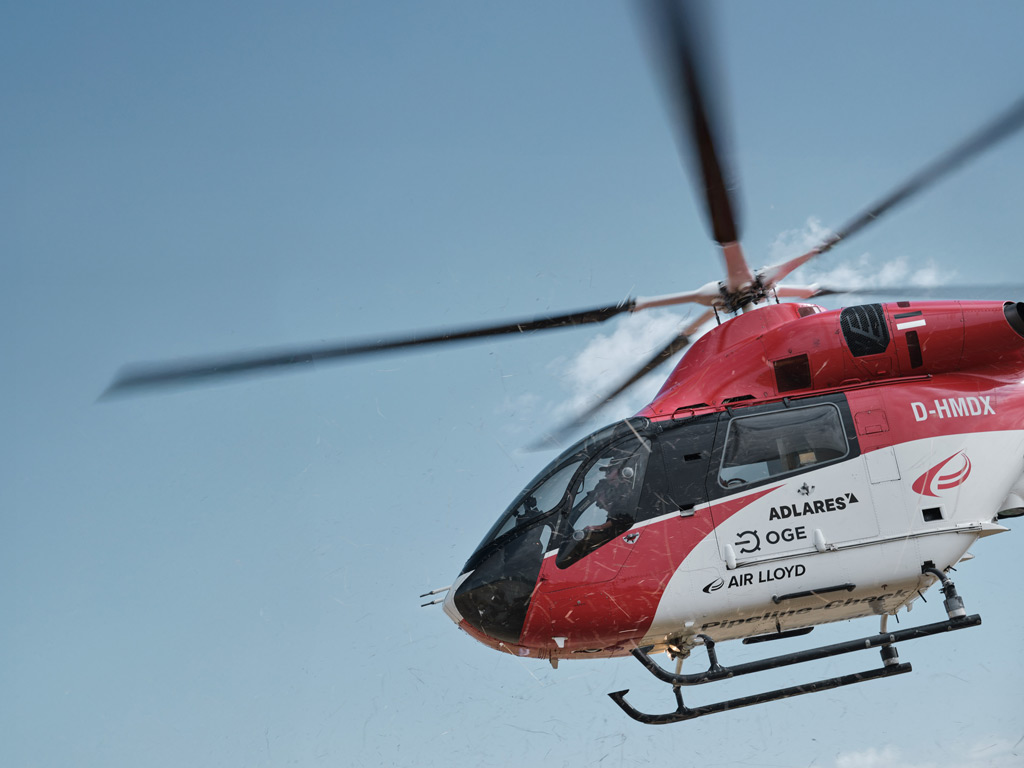
We built our CHARM technology specifically to meet the demands of modern methane regulation, and it is now the only airborne gas leak detection system in the world certified under DVGW G465-4-5 and fully Type-2 compliant under EU Methane Regulation 2024/1787. Here is what working with us looks like in practice:
- Type-2 certified aerial surveys: Our helicopter-based CHARM system detects leaks at 300 ppm, three times more sensitive than the 1,000 ppm Type-2 threshold, giving you reliable detection under all allowable operating conditions, not just ideal ones.
- High-speed, large-scale coverage: Flying at up to 180 km/h at 100 to 150 metres altitude, we can survey extensive pipeline networks efficiently, making the three-year Type-2 inspection interval genuinely cost-effective across large asset portfolios.
- Source-level and site-level quantification: We support both the bottom-up leak identification and top-down site emission quantification required for OGMP 2.0 Level 5, helping you build the reconciled data picture the regulation demands by August 2028.
- Secure Web GIS delivery: Survey results are delivered through a secure Web GIS platform accessible on desktop and mobile, so your team can verify findings and act on gas indications without delay.
- Over 250,000 km of pipeline inspected: We bring deep operational experience across European gas grid operators, meaning we understand the practical realities of large-scale LDAR compliance, not just the regulatory theory.
If you are working through your compliance obligations under the EU Methane Regulation and want to understand how airborne LDAR surveys fit into your programme, we would be glad to talk. Get in touch with our team to discuss your specific network and timeline.
Dieser Inhalt wurde mithilfe von KI erstellt und kann Fehler enthalten.