
Methane leaks in gas pipelines are more than a technical inconvenience. They represent a genuine threat to public safety, human health, and the climate. Whether you work in pipeline operations, live near gas infrastructure, or simply want to understand the risks, knowing what makes these leaks dangerous is the first step toward taking them seriously. The good news is that detection technology has advanced significantly, and early identification of leaks is now both faster and more reliable than ever before.
What makes methane leaks in gas pipelines dangerous?
Methane leaks in gas pipelines are dangerous for three distinct reasons: they are explosive, they displace oxygen in enclosed spaces, and they are a potent greenhouse gas. Natural gas is primarily composed of methane, a highly flammable substance that ignites when its concentration in air reaches between 5% and 15%. Below or above that range, it will not combust, but within that window, a single spark is enough to trigger a fire or explosion. Beyond the immediate physical hazard, methane that escapes into the atmosphere contributes significantly to climate change, making even small, undetected leaks a long-term environmental concern.
What makes gas pipeline leaks particularly unpredictable is how methane travels underground. Research from the METEC (Methane Emissions Technology Evaluation Center) and the Engler-Bunte Institute shows that underground emissions form wider plumes above ground. The gas does not always emerge directly above the leak point. Depending on soil structure, it can travel laterally before surfacing, which means the visible or measurable sign of a leak may appear meters away from the actual fault in the pipe. This widening of the plume makes detection more complex and reinforces why thorough, grid-based pipeline inspection services are essential, rather than simple point-by-point scanning along the pipeline centerline.
How does a methane gas leak cause an explosion?
An explosion occurs when methane accumulates in a confined or semi-confined space and reaches its lower explosive limit of approximately 5% concentration in air. At that point, any ignition source, whether an electrical spark, an open flame, or even static electricity, can trigger rapid combustion. In pipeline scenarios, this risk is most acute in enclosed environments such as basements, utility tunnels, underground vaults, or buildings located above a buried pipeline route.
The danger is compounded by the fact that methane is odorless and colorless in its natural state. The distinctive smell associated with domestic gas comes from an additive called mercaptan, which is introduced specifically as a safety measure. In transmission pipelines, particularly high-pressure steel lines, this odorant may not always be present or detectable at low concentrations. This means a dangerous accumulation can build up without any sensory warning to people nearby.
From a physical standpoint, the smallest possible leak in a steel transmission pipeline operating above 5 bar pressure is approximately 150 liters per hour, equivalent to around 110 grams of methane per hour. This is not a regulatory figure but a structural and physical constraint: the material properties of steel and the pressure gradient determine the minimum size of a defect and the minimum flow rate it will produce. Even at this threshold, the volume of gas released is sufficient to create hazardous concentrations in a poorly ventilated space within a short period.
What are the health effects of exposure to methane?
Methane itself is not classified as a toxic gas. It does not poison the body through chemical interaction. However, it is an asphyxiant, meaning it displaces oxygen in the air. In an enclosed space where methane concentrations rise significantly, the available oxygen falls correspondingly. Symptoms of oxygen deprivation include headaches, dizziness, nausea, confusion, and loss of consciousness. At very high concentrations, asphyxiation can be fatal.
For workers who operate in confined spaces near gas infrastructure, such as valve pits, meter rooms, or underground chambers, this risk is particularly relevant. Routine entry into such spaces without gas monitoring equipment is a serious occupational hazard. In outdoor environments, the risk of asphyxiation from a pipeline leak is generally lower because wind disperses the gas quickly. However, in still air conditions or in depressions in the ground where gas can pool, localized concentrations can still pose a risk to people and animals nearby.
It is also worth noting that natural gas often contains trace amounts of other compounds, including benzene, which is a known carcinogen. While these are present in very small quantities, prolonged exposure near a persistent, undetected leak may carry additional health considerations beyond the immediate asphyxiation risk.
How much does a methane leak damage the environment?
Methane is a significantly more potent greenhouse gas than carbon dioxide over a 20-year timeframe. This makes even relatively small, persistent leaks from gas infrastructure a meaningful contributor to climate change. The EU Methane Regulation (2024/1787) reflects this concern directly, placing legal obligations on pipeline operators to detect and repair leaks as part of mandatory Leak Detection and Repair (LDAR) programmes.
Under the regulation, operators were required to establish an LDAR plan and conduct their first Type-2 inspection survey by August 2025. The repair obligation is triggered when a leak is detected above 1,000 ppm or 5 grams per hour for underground components. All identified leaks must be recorded, and the records retained for at least ten years. The framework is designed to ensure that environmental damage from gas infrastructure is systematically identified and addressed, rather than left to accumulate undetected over years or decades.
Beyond the regulatory picture, the environmental argument for proactive leak detection is straightforward. A leak that goes undetected for months or years releases a continuous stream of methane into the atmosphere. Multiplied across thousands of kilometers of aging pipeline infrastructure across Europe, the cumulative climate impact is substantial. Early detection and prompt repair are therefore not just a compliance requirement but a genuine environmental responsibility.
How are methane leaks in pipelines detected?
Several methods exist for detecting methane leaks in gas pipelines, ranging from ground-level handheld instruments to advanced airborne systems. Ground-based methods typically involve technicians walking along a pipeline route with portable gas detectors. While effective for short sections or targeted follow-up inspections, this approach is time-consuming and difficult to scale across networks spanning thousands of kilometers.
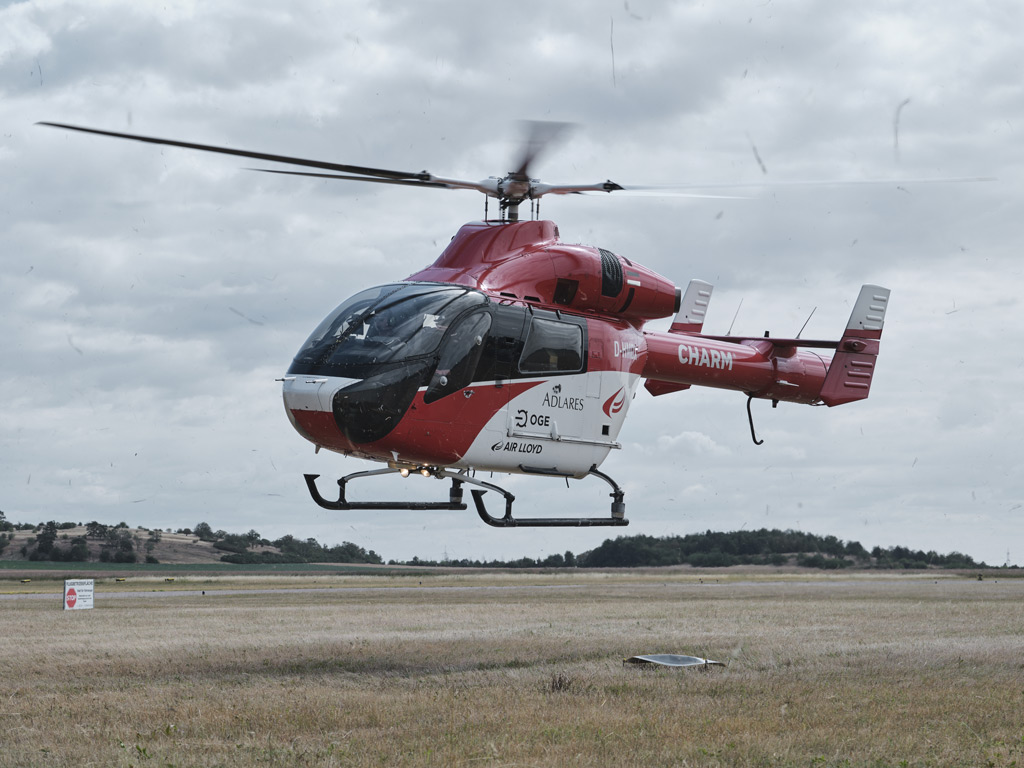
Airborne detection offers a far more efficient solution for large-scale surveys. Helicopter-mounted laser systems can cover extensive pipeline networks at speed, scanning the ground below for methane concentrations. Reliable aerial detection requires more than simply flying along the pipeline centerline. Because underground plumes widen and shift with soil structure and wind, the scan must cover a grid extending at least 10 meters either side of the pipeline, with spatial resolution better than 2 meters per measurement point. A system that only produces a string of measurements directly above the pipe will miss real leaks that have migrated laterally before surfacing.
The atmospheric background concentration of methane is approximately 2 parts per million (ppm). For aerial detection of high-pressure underground pipelines, the meaningful reference point is not this background level but the ground-level signal produced by the smallest physically possible leak in a steel pipe under pressure. DVGW certification tests measured approximately 300 ppm directly above the pipeline route at this minimum leak rate. A reliable aerial detection system must therefore be capable of resolving concentrations in this range, not simply exceeding the 2 ppm atmospheric baseline.
Understanding the difference between Type-1 and Type-2 inspection under the EU Methane Regulation is also important for operators choosing a detection approach. Type-1 inspections require a detection threshold of 17 g/h (7,000 ppm), suitable for optical gas imaging cameras or handheld tools. Type-2 inspections demand a more sensitive threshold of 5 g/h (1,000 ppm) and, in return, allow longer inspection intervals of three years for underground pipelines. Operators who invest in higher-sensitivity technology therefore benefit from reduced inspection frequency, which can offset the higher cost of the technology over time.
How quickly should a gas pipeline leak be repaired?
The speed of repair depends on the size of the leak, its location, and the regulatory framework in place. Under the EU Methane Regulation, any leak detected above the relevant threshold triggers a formal repair obligation. Operators must act promptly, and all findings must be documented and retained for at least ten years. The regulation does not set a single universal repair deadline for all leak types, but the intent is clear: identified leaks must not be left unaddressed.
From a safety standpoint, the priority is straightforward. A leak that poses an immediate risk of ignition or asphyxiation requires an emergency response. A smaller, slower leak in a low-risk location may allow for planned maintenance within a defined window. In practice, pipeline operators typically classify findings by severity and assign repair timelines accordingly, balancing urgency against operational and logistical constraints.
What matters most is that leaks are found in the first place. A leak that is never detected is never repaired, and the longer it goes unnoticed, the greater the accumulated safety, health, and environmental risk. This is why the design and sensitivity of the detection programme matter so much. Reliable, certified detection technology that covers the full pipeline corridor rather than a narrow strip above the centerline gives operators the confidence that their network has genuinely been inspected, not just partially scanned.
How ADLARES helps detect and manage methane leaks in gas pipelines
At ADLARES, we provide airborne methane leak detection services built around our proprietary CHARM technology, the world’s only DVGW-approved gas remote detection system for aerial pipeline inspection. Since entering commercial use in 2008, we have inspected over 250,000 kilometers of gas pipelines across Europe for grid operators of all sizes. Our approach addresses every dimension of the danger described in this article, from explosive risk and environmental impact to regulatory compliance.
- Full-grid coverage: Our helicopter-mounted CHARM system scans a swath extending well beyond the pipeline centerline, capturing 1,000 measurement points per second at spatial resolution better than 2 meters, ensuring underground plumes that migrate laterally are not missed.
- Verified sensitivity: CHARM is independently verified to detect ground-level concentrations of 300 ppm in a 2×2 square meter area, three times more sensitive than the EU Methane Regulation Type-2 threshold of 1,000 ppm, providing reliable detection under all certified operating conditions.
- EU Methane Regulation compliance: Our service meets the requirements for Type-2 LDAR inspections under Regulation 2024/1787, enabling operators to qualify for the three-year underground inspection interval.
- Secure results delivery: Survey findings are delivered through a secure Web GIS platform accessible on desktop and mobile, so your team can verify indications and plan repairs without delay.
- Speed at scale: Flying at up to 180 km/h at 100 to 150 meters altitude, we can survey large pipeline networks efficiently, reducing the time your infrastructure goes without a current inspection record.
If you operate gas pipelines and want to understand how our services can support your LDAR obligations and safety programme, visit our pipeline inspection services page or get in touch with the ADLARES team to discuss your network and inspection requirements.
Dieser Inhalt wurde mithilfe von KI erstellt und kann Fehler enthalten.