
MERR requirements are a specific set of obligations under the EU Methane Regulation that govern how gas transmission and distribution operators must detect, measure, and report methane emissions from their infrastructure. MERR stands for Methane Emission Reporting Requirements, and it forms one of the most technically demanding components of the broader regulatory framework. The sections below break down each key aspect of MERR compliance, from what the regulation requires to which survey methods qualify.
What does the EU Methane Regulation actually require from gas operators?
The EU Methane Regulation requires gas operators to systematically detect, quantify, and report methane emissions from their infrastructure. It applies to operators across the natural gas supply chain, including transmission, distribution, storage, and LNG facilities. Operators must implement Leak Detection and Repair (LDAR) programmes, report emissions data, and meet escalating obligations tied to specific regulatory timelines.
The regulation entered into force in August 2024 and sets out a phased schedule of obligations. At its core, it aims to reduce methane emissions from the energy sector as part of the EU’s broader climate commitments. Gas operators are not simply required to monitor emissions passively. They must take active steps to locate leaks, categorise them by severity, repair them within defined timeframes, and document the entire process in a verifiable way.
The regulation also distinguishes between different types of equipment and infrastructure, applying different survey frequencies and detection thresholds depending on whether assets are above or below ground. Underground infrastructure, in particular, is subject to stricter sensitivity requirements because leaks are harder to detect and can persist unnoticed for longer periods.
What are MERR requirements and how do they fit into the regulation?
MERR requirements, or Methane Emission Reporting Requirements, are the specific technical and procedural standards that operators must meet when surveying their gas infrastructure for leaks. Within the EU Methane Regulation, MERR defines the sensitivity thresholds, survey frequencies, and documentation standards that LDAR programmes must satisfy to be considered compliant.
MERR sits within the LDAR framework of the regulation but adds a layer of precision. It is not enough to simply conduct a survey. The survey method must be capable of detecting leaks at or below defined minimum detection levels, and results must be reported in a standardised format that allows regulators to assess compliance. For underground equipment, the regulation specifies that survey methods must meet Type 2 sensitivity levels, which demand high-performance detection technology.
MERR requirements also govern how emission data feeds into national and EU-level reporting. Operators must submit findings to competent authorities, and those findings must be reproducible and auditable. This makes the choice of survey method and the quality of data output critically important for gas operators managing pipeline inspection compliance.
How do MERR requirements differ from standard LDAR obligations?
Standard LDAR obligations set out the general duty to detect and repair leaks, while MERR requirements specify the technical performance standards that detection surveys must meet. LDAR tells operators what to do; MERR defines how well they must do it and how they must prove it.
A standard LDAR programme requires operators to survey their assets at regular intervals, identify leaks, and repair them within set timeframes. MERR goes further by mandating minimum detection sensitivity, meaning that only survey methods capable of identifying leaks below a certain threshold count as compliant. A survey conducted with a method that misses small but reportable leaks would not satisfy MERR requirements, even if it technically constitutes a survey under a basic LDAR framework.
MERR also places greater emphasis on quantification. It is not sufficient to flag that a leak exists. Operators must be able to estimate the emission rate, which informs both the repair priority and the emissions inventory submitted to regulators. This combination of high sensitivity and quantification capability is what makes MERR compliance more technically demanding than basic LDAR alone.
Which survey methods are accepted for MERR compliance?
The EU Methane Regulation accepts survey methods that meet defined sensitivity and performance criteria, rather than prescribing a single technology. For above-ground equipment, optical gas imaging and portable detection instruments are commonly used. For underground pipelines and infrastructure, the regulation requires methods capable of achieving Type 2 sensitivity levels, which effectively means high-sensitivity remote or airborne detection systems.
Ground-based walking surveys have traditionally been the standard approach for pipeline inspection, but they are labour-intensive, slow, and limited in the detection sensitivity they can achieve over large networks. As a result, operators managing extensive transmission or distribution networks are increasingly turning to advanced technologies that can cover large distances efficiently while meeting the sensitivity thresholds MERR demands.
Accepted methods must be validated and, where applicable, certified by recognised bodies. In Germany and across much of Europe, DVGW certification is an important benchmark for gas detection technology. Any method used for MERR compliance must produce documented, auditable results that can be submitted as part of an operator’s regulatory reporting obligations.
How does airborne methane detection support MERR compliance?
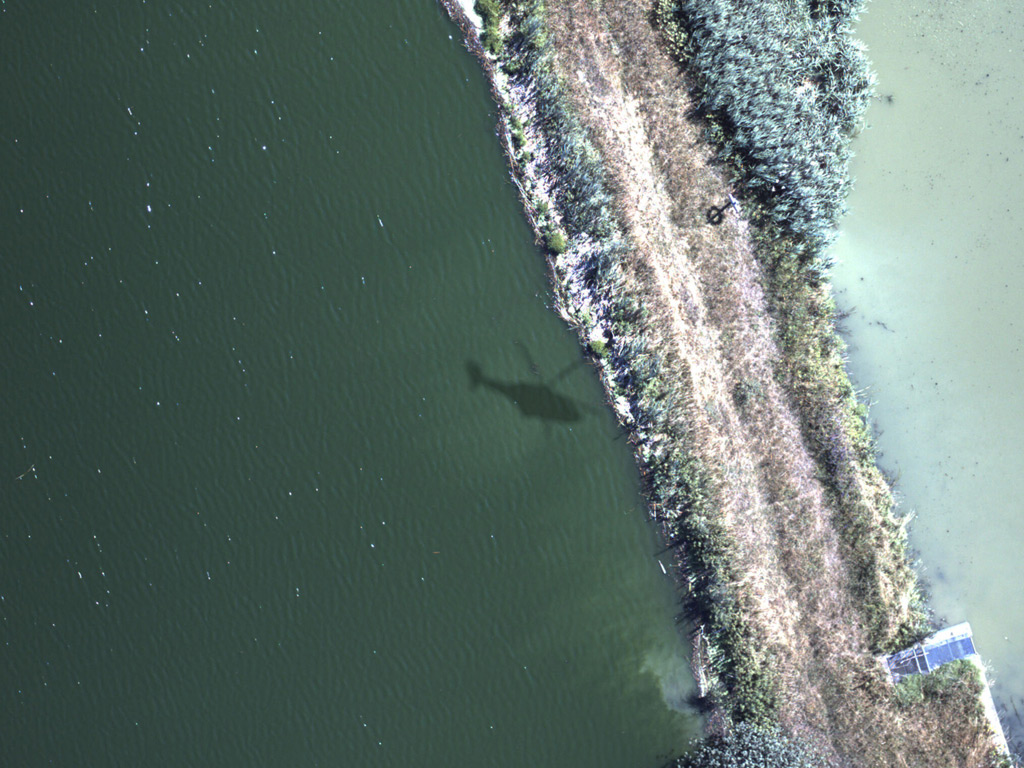
Airborne methane detection supports MERR compliance by combining high survey speed with the sensitivity levels required for underground infrastructure under the EU Methane Regulation. A helicopter-based system can survey hundreds of kilometres of pipeline in a single flight, detecting leaks at rates that ground-based methods cannot match at scale, while producing quantified, georeferenced data ready for regulatory reporting.
The Differential Absorption LIDAR (DIAL) method is particularly well suited to MERR requirements. By emitting two laser pulses at different wavelengths and measuring how methane absorbs one relative to the other, DIAL systems can detect very small leaks from altitude without requiring physical access to the pipeline route. This is especially valuable for underground pipelines, where Type 2 sensitivity is required and where ground conditions can make walking surveys slow and incomplete.
Airborne surveys also generate the kind of structured, georeferenced output that MERR reporting demands. Each gas indication is logged with precise location data, estimated emission rate, and survey conditions, giving operators a complete and auditable record of their inspection programme. Results delivered through a secure Web GIS platform allow operators to review findings, prioritise repairs, and extract the data needed for regulatory submissions.
When must operators begin meeting MERR obligations under the EU Methane Regulation?
The EU Methane Regulation entered into force in August 2024, with MERR obligations applying on a phased timeline. Operators were required to begin implementing LDAR programmes from 2025, with reporting obligations and stricter MERR requirements progressively tightening through 2026 and beyond. Operators should treat 2026 as an active compliance year, not a preparation phase.
The phased approach gives operators time to establish the necessary survey programmes and reporting infrastructure, but the window for preparation is narrowing. Operators who have not yet assessed whether their current survey methods meet MERR sensitivity requirements should do so promptly. Selecting a compliant survey method, scheduling surveys across the network, and establishing a reporting workflow all take time to put in place.
National competent authorities are responsible for enforcing the regulation in each member state, and operators should monitor guidance from their relevant authority alongside the EU-level regulatory text. The regulation also includes provisions for review and potential tightening of requirements, so building a robust and flexible compliance programme now reduces the risk of needing to overhaul it as standards evolve. For operators looking to understand the full scope of their obligations, the EU Methane Regulation framework is the essential starting point.
How ADLARES supports MERR compliance for gas operators
We at ADLARES provide airborne methane detection services specifically designed to meet the technical demands of MERR compliance under the EU Methane Regulation. Our CHARM® technology is the world’s only DVGW-approved gas remote detection system, and it delivers the Type 2 sensitivity required for underground pipeline surveys under the regulation.
- High sensitivity detection: CHARM® detects leakage rates from 150 litres per hour using the DIAL method, meeting the strictest MERR sensitivity thresholds for underground infrastructure.
- Rapid network coverage: Flying at speeds of up to 180 km/h at 100 to 150 metres altitude, we can inspect large pipeline networks efficiently, reducing the time and cost of achieving full network coverage.
- Auditable, regulation-ready data: Survey results are delivered through a secure Web GIS platform, providing georeferenced gas indications, emission estimates, and full documentation for MERR reporting submissions.
- Proven track record: Over 250,000 km of gas pipelines inspected across Europe for major grid operators, with commercial operations running since 2008.
- DVGW-certified technology: The only airborne system with DVGW approval, giving operators confidence that their survey method will be recognised by regulators.
If you are assessing how to meet your MERR obligations under the EU Methane Regulation, we are ready to help. Get in touch with our team to discuss your network, your timeline, and how CHARM® can fit into your compliance programme.
Dieser Inhalt wurde mithilfe von KI erstellt und kann Fehler enthalten.