
Methane is one of the most talked-about gases in the context of climate change and energy infrastructure, yet many people are unsure where it actually comes from. Understanding methane formation, whether in nature or through industrial activity, is essential for anyone working in energy, environmental science, or gas infrastructure management. This article breaks down the origins of methane, the difference between its natural and industrial sources, and how modern technology is used to detect and monitor it.
What is methane and why does it matter?
Methane (CH4) is the simplest hydrocarbon, made up of one carbon atom bonded to four hydrogen atoms. It is the primary component of natural gas and one of the most potent greenhouse gases in the atmosphere. Over a 20-year period, methane traps significantly more heat than carbon dioxide, making it a critical target for climate action.
Beyond its climate impact, methane is also a valuable energy resource. It powers homes, industries, and electricity generation across the globe. This dual nature, both an energy asset and an environmental liability, means that understanding where methane comes from and how it behaves is important for operators, regulators, and policymakers alike. The EU Methane Regulation (Regulation EU 2024/1787), which entered into force in August 2024 as part of the „Fit for 55“ climate package, reflects this concern by targeting direct methane emissions from the oil, gas, and coal sectors for the first time in European law.
How is methane formed naturally in the environment?
In nature, methane forms primarily through a biological process called methanogenesis. This occurs when microorganisms known as methanogens break down organic matter in oxygen-free environments. Common natural settings where this happens include:
- Wetlands and marshes: Decomposing plant material in waterlogged soils produces large volumes of methane, making wetlands the largest natural source globally.
- Oceans and lakes: Sediment at the bottom of water bodies supports microbial activity that generates methane, some of which bubbles up to the surface.
- Permafrost: As Arctic permafrost thaws due to rising temperatures, stored organic matter decomposes and releases methane that has been locked away for thousands of years.
- Termites and ruminants: The digestive systems of termites and large animals like cattle produce methane as a byproduct of breaking down cellulose and plant material.
This naturally occurring methane, produced by living organisms and biological processes, is referred to as biogenic methane. It forms part of the natural carbon cycle and has been present in the atmosphere long before human industrial activity began.
How does methane form underground in fossil fuel deposits?
Not all methane originates from biological activity. A large portion of the methane found underground, particularly in natural gas fields and coal seams, formed through a very different process over millions of years. This is known as thermogenic methane or natural gas formation.
When ancient organic material, such as marine organisms, algae, and plant matter, was buried under layers of rock and sediment, it was subjected to intense heat and pressure over geological timescales. These conditions caused the organic compounds to break down chemically, forming hydrocarbons including methane. The deeper the burial and the higher the temperature, the more methane-rich the resulting gas tends to be.
This is the origin of the natural gas that flows through pipelines across Europe and the world. It also explains why methane is found in coal beds, where it is adsorbed onto the coal surface and released during mining operations. Understanding this formation process helps explain why natural gas deposits are found in specific geological formations and why extracting them requires careful pressure management.
What are the main industrial sources of methane emissions?
While natural methane formation is part of the Earth’s carbon cycle, human activity has significantly accelerated methane emissions. The main industrial sources include:
- Oil and gas production: Methane is released during drilling, extraction, processing, and transportation. Leaks in pipelines, valves, and fittings are a major contributor, which is why pipeline inspection services have become increasingly important under EU regulation.
- Coal mining: Methane trapped in coal seams escapes during underground and surface mining operations.
- Agriculture: Livestock digestion (enteric fermentation) and manure management are among the largest agricultural sources of methane globally.
- Landfills: Decomposing organic waste in landfills produces methane through the same microbial processes that occur in wetlands, but in concentrated, human-managed settings.
- Wastewater treatment: Organic matter in sewage systems breaks down anaerobically, generating methane that can either be captured for energy or released into the atmosphere.
Among these, the oil and gas sector receives particular regulatory attention because leaks are technically preventable. The EU Methane Regulation specifically targets this sector, requiring operators to implement Leak Detection and Repair (LDAR) programmes with clear timelines and sensitivity thresholds.
What is the difference between biogenic and thermogenic methane?
The distinction between biogenic and thermogenic methane goes beyond just their origin. It has practical implications for how methane is measured, attributed, and regulated.
Biogenic methane is produced by microbial activity in environments such as wetlands, rice paddies, landfills, and the digestive systems of animals. It forms at ambient temperatures and pressures and is part of the short-term carbon cycle, meaning the carbon it contains was recently part of living organisms.
Thermogenic methane, by contrast, originates from the slow chemical transformation of ancient organic matter under high heat and pressure deep underground. It is the methane found in natural gas reservoirs and coal beds. Because it has been stored underground for millions of years, releasing it into the atmosphere introduces carbon that would not otherwise be part of the current atmospheric cycle.
Scientists can distinguish between the two types using isotopic analysis, since biogenic and thermogenic methane have different ratios of carbon isotopes (carbon-12 and carbon-13). This technique is increasingly used in emissions research and regulatory verification to determine whether a detected methane plume originates from a pipeline leak or a nearby agricultural or biological source.
How is methane detected and monitored in gas infrastructure?
Detecting methane leaks in gas pipelines and infrastructure is a technical challenge that has evolved significantly over recent decades. Traditional ground-based inspection methods require technicians to walk along pipeline routes with handheld sensors, which is time-consuming and limits the area that can be covered efficiently.
Modern approaches use a combination of technologies to detect methane emissions more reliably and at greater scale. Research by institutions such as the Engler-Bunte Institute and METEC has shown that underground leaks do not always emerge directly above the pipe. Gas travels through soil and the resulting plume can widen considerably before reaching the surface, meaning a single line of measurement points along the pipeline route is often insufficient for reliable detection. Effective inspection requires a grid of measurement points extending at least 10 metres on either side of the pipeline centerline, with spatial resolution better than 2 metres.
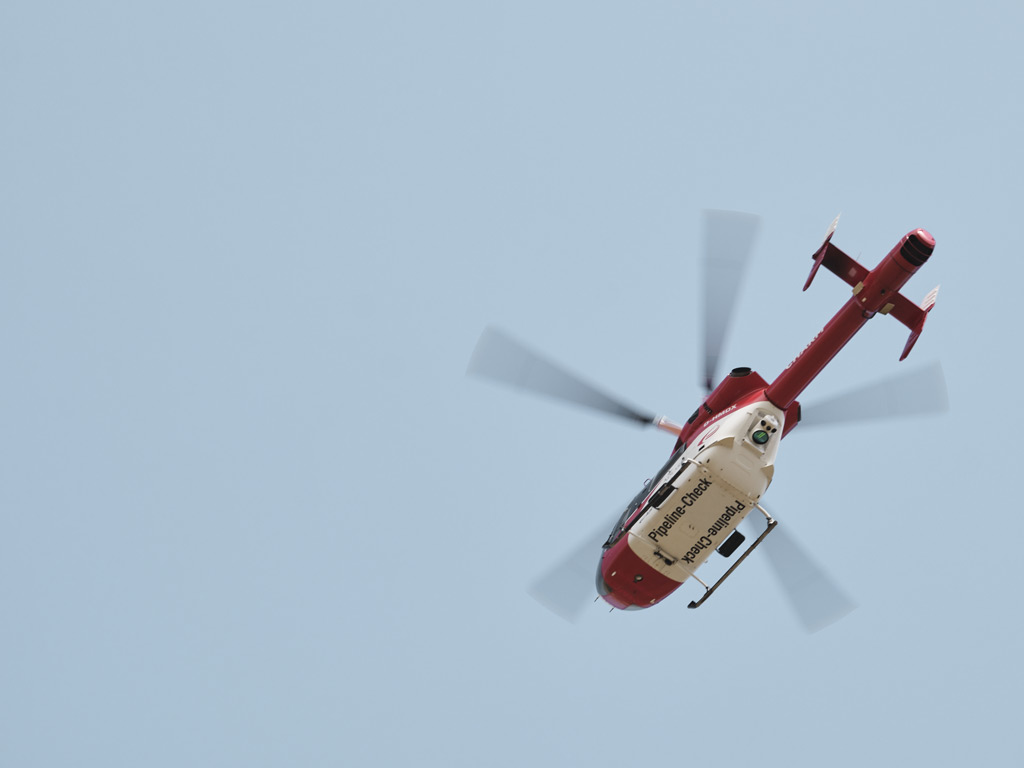
Airborne detection using laser-based systems has emerged as a highly effective solution for large-scale pipeline surveys. These systems use the Differential Absorption LIDAR (DIAL) method, which identifies methane by measuring how it absorbs laser light at specific wavelengths. Flying at low altitude, such systems can cover hundreds of kilometres of pipeline in a single day while capturing thousands of measurement points per second across a wide scan swath.
The EU Methane Regulation sets two inspection classes with different sensitivity requirements. Type-1 inspections require a detection limit of 17 g/h (or 7,000 ppm local concentration), while the more demanding Type-2 inspections require a detection limit of 5 g/h (or 1,000 ppm). Technologies certified at the Type-2 level are rewarded with longer inspection intervals, creating a direct incentive for operators to invest in more sensitive equipment. You can learn more about how these standards apply to real-world operations by exploring airborne methane detection services designed to meet these requirements.
How ADLARES helps with methane detection and pipeline inspection
We at ADLARES have spent over two decades developing and refining airborne methane detection technology specifically for gas pipeline operators and infrastructure managers. Our CHARM® system is the world’s only DVGW-certified aerial gas remote detection technology, and it is fully compliant with EU Methane Regulation Type-2 requirements. Here is what we bring to every inspection:
- High-speed coverage: Our helicopter-mounted CHARM® system flies at speeds of up to 180 km/h and altitudes of 100 to 150 metres, covering large pipeline networks efficiently without disrupting operations on the ground.
- Exceptional sensitivity: With a measurement rate of 1,000 points per second and a scan swath of 10 to 30 metres, CHARM® reliably detects methane concentrations of 300 ppm in 2×2 m² areas, corresponding to the physical minimum leak rate in pressurised steel pipes above 5 bar.
- Regulatory compliance: CHARM® satisfies the „best available technology“ standard required under Article 14(7) of the EU Methane Regulation and is certified under DVGW G465-4-5, the recognised technical standard for aerial pipeline inspection.
- Actionable results: Survey data are delivered through a secure Web GIS platform, accessible on both desktop and mobile devices, so your team can verify findings and prioritise repairs without delay.
- Over 250,000 km inspected: Our operational track record across European gas grid operators gives us unmatched experience in translating detection data into practical maintenance decisions.
If you are preparing for your LDAR obligations under the EU Methane Regulation or simply want to understand how airborne inspection can improve your pipeline integrity programme, we would be glad to help. Explore our inspection services or get in touch with our team to discuss your specific network and compliance requirements.
Dieser Inhalt wurde mithilfe von KI erstellt und kann Fehler enthalten.