
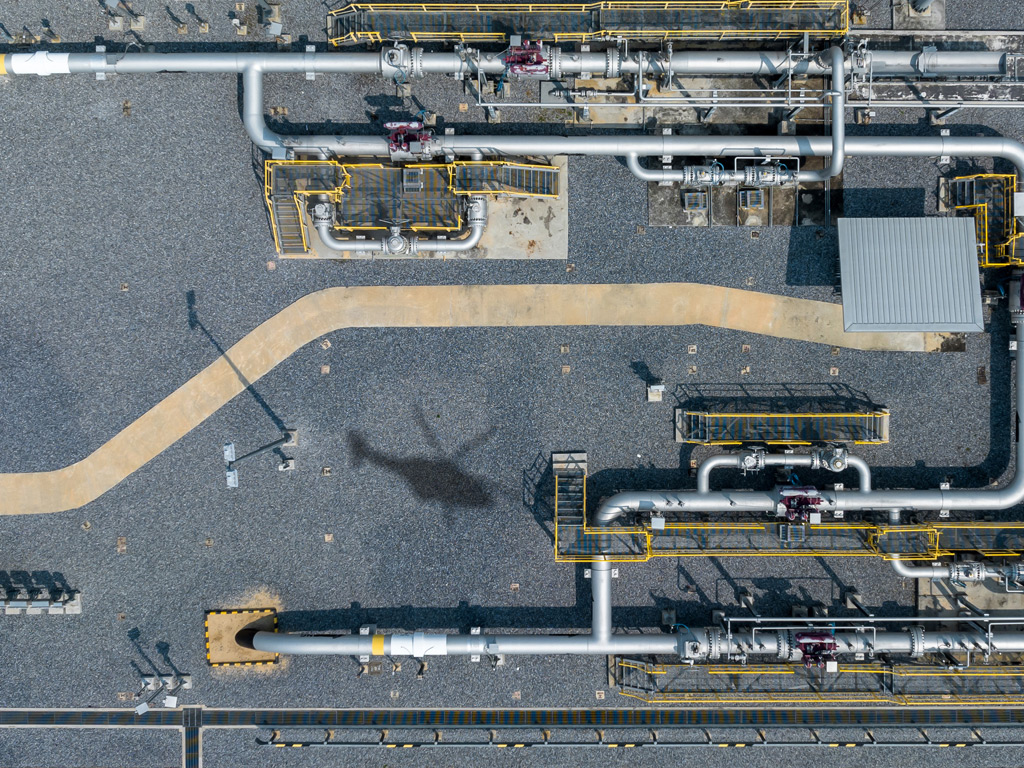
Natural gas powers homes, heats buildings, and fuels industrial processes across Europe and beyond. Yet every kilometre of pipeline, every compressor station, and every connection point in the gas network is a potential source of methane emissions. Methane is the primary component of natural gas and also one of the most potent greenhouse gases in the short term, making leakage from the gas industry a pressing environmental and regulatory concern. Understanding how much methane actually escapes, where it comes from, and what modern detection technology can do about it is increasingly important for grid operators, regulators, and anyone following the energy transition.
Why does methane leakage from the gas industry matter so much?
Methane is responsible for a significant share of near-term climate warming. Over a 20-year period, methane traps heat in the atmosphere far more effectively than carbon dioxide, which means even relatively small volumes of leakage can have a disproportionate climate impact. For the gas industry specifically, this creates a dual challenge: the product being transported is itself a potent greenhouse gas, and any loss along the supply chain undermines the climate credentials of natural gas as a transition fuel.
Beyond the climate dimension, methane leakage represents a direct economic loss for gas operators. Gas that escapes into the atmosphere is gas that cannot be sold. As regulatory pressure intensifies and carbon pricing mechanisms evolve, the financial cost of undetected leaks is rising alongside the environmental cost. This combination of environmental urgency and economic incentive is driving significant investment in leak detection and repair programmes across Europe.
How much methane does the gas industry leak each year?
Precise figures for total methane leakage from the gas industry are difficult to pin down because emissions vary enormously depending on infrastructure age, pipeline material, operating pressure, and the quality of maintenance programmes. Estimates from industry bodies and research institutions suggest that transmission and distribution networks collectively lose a small but meaningful percentage of the gas they carry, with older distribution networks typically showing higher leakage rates than modern high-pressure transmission lines.
What is clear from field studies is that a relatively small number of larger leaks tend to account for a disproportionate share of total emissions. This so-called „super-emitter“ pattern means that targeted detection and repair of the most significant leaks can deliver substantial emissions reductions even before every minor seep is addressed. For high-pressure steel transmission pipelines, the physics of the system actually set a lower bound on how small a real leak can be: at line pressures above 5 bar, the smallest physically possible leak in steel pipes is approximately 150 litres per hour, equivalent to roughly 110 grams of methane per hour. This is a structural constraint determined by the minimum size of a defect that can exist in steel and the pressure driving gas through it, not a regulatory or commercial choice.
Where do methane leaks most commonly occur in gas infrastructure?
Methane can escape from virtually any point in the gas supply chain, but certain components and infrastructure types are more prone to leakage than others.
- Underground transmission pipelines: Corrosion, ground movement, and joint failures can create leaks that are invisible from the surface and may go undetected for extended periods without active inspection programmes.
- Compressor stations: These high-pressure facilities involve numerous valves, seals, and connections that can develop leaks, often releasing methane during normal operations or maintenance activities.
- Distribution networks: Older cast iron and unprotected steel distribution pipes in urban areas are a well-documented source of leakage, particularly where pipes have aged beyond their design life.
- Above-ground installations: Pressure reduction stations, metering points, and flanged connections are common leak locations that can be inspected with handheld instruments or optical gas imaging cameras.
- Landfills and industrial sites: While not strictly part of the gas grid, these sites emit methane from decomposing organic material and industrial processes, and they represent an important monitoring target for regulators.
Research conducted by institutions including the Engler-Bunte Institute demonstrates that underground leaks do not always emerge directly above the pipe. Gas travels through soil before reaching the surface, and the resulting emission plume can be displaced laterally and spread across a wider area than the leak point itself. This behaviour has important implications for how inspection surveys need to be designed and what coverage area detection technology must achieve.
What does the EU Methane Regulation require from gas operators?
The EU Methane Regulation (2024/1787) establishes binding obligations for leak detection and repair across the European gas sector. It introduces a structured framework with two inspection classes that carry different sensitivity requirements and monitoring intervals.
Type-1 inspections require a detection threshold of 17 grams per hour, or a local concentration of 7,000 parts per million (ppm). This level of sensitivity is achievable with optical gas imaging cameras used at close range or with less sensitive handheld equipment, and Type-1 surveys must be conducted more frequently.
Type-2 inspections require a significantly more sensitive detection threshold of 5 grams per hour, or 1,000 ppm local concentration. Because they use more capable technology, Type-2 inspections on underground pipelines are required only once every three years, giving operators a concrete economic incentive to invest in higher-performance detection systems.
The regulation also establishes a staged compliance timeline. The first reporting cycle began in 2025, and operators were required to initiate their first Type-2 leak detection and repair survey by August 2025. By August 2028, all EU assets must achieve OGMP 2.0 Level 5 reporting standards, and by 2030, importers must demonstrate that imported gas meets methane intensity limits set by the European Commission. All identified leaks must be recorded regardless of size, with records retained for at least ten years.
One important area still under development is the specific detection threshold for the first stage of aerial inspection at underground infrastructure. This is to be defined in a forthcoming Implementing Act, which is currently subject to public consultation. Until that act is adopted, Article 14(7) of the regulation requires operators to use the best available technologies and detection techniques in compliance with manufacturer specifications. This interim standard effectively rewards technologies that hold rigorous third-party certification, such as those certified under DVGW G465-4-5.
For a broader overview of what pipeline inspection services involve in practice, visit our pipeline inspection and gas leak detection services page.
How does aerial methane leak detection work?
Aerial methane detection uses aircraft-mounted laser systems to scan pipeline corridors from above, covering large distances at survey speeds that ground-based inspection cannot match. The underlying principle exploits the fact that methane absorbs light at specific wavelengths. By emitting two laser pulses at slightly different wavelengths and comparing the reflected signals, the system can identify the presence and concentration of methane in the air column between the aircraft and the ground.
This technique, known as Differential Absorption LIDAR (DIAL), allows the system to distinguish methane from other atmospheric gases and quantify concentrations along the flight path. The aircraft flies at altitudes typically between 100 and 150 metres, covering the pipeline corridor at speeds of up to 180 kilometres per hour.
Critically, effective aerial detection is not simply a matter of flying directly over a pipeline. Because underground gas plumes widen before reaching the surface and may not emerge directly above the pipe, reliable detection requires a measurement grid that extends at least 10 metres either side of the pipeline centreline, with spatial resolution better than 2 metres. Studies by METEC (Methane Emissions Technology Evaluation Center) and the Engler-Bunte Institute confirm this requirement. Systems that produce only a single string of measurement points along the pipeline route cannot reliably detect real leaks because the plume may be displaced to either side of the flight path.
How accurate and sensitive are modern methane detection methods?
Sensitivity in aerial methane detection is often discussed in terms of minimum detectable leak rate or minimum detectable concentration. These two measures are related but not identical, and the distinction matters when evaluating whether a technology is fit for purpose under the EU Methane Regulation.
For underground high-pressure pipelines, the physically meaningful detection floor is set by the properties of the pipe material and the operating pressure. At pressures above 5 bar in stainless steel pipelines, the smallest real leak that can exist produces a ground-level methane concentration of approximately 300 ppm over a 2 by 2 metre area directly above the pipeline route. This figure was measured during independent certification testing using a bell probe at the physical minimum leak rate. A detection system that claims sensitivity below this level is responding to signals that cannot correspond to a real underground leak in a high-pressure steel pipe.
The EU Methane Regulation’s Type-2 threshold of 1,000 ppm is three times higher than this physical minimum concentration, which means a compliant Type-2 system must reliably detect concentrations well below the threshold under all allowable environmental conditions, not just in ideal laboratory settings. A meaningful sensitivity margin above the required threshold is therefore essential for consistent real-world performance.
It is also worth noting that sensitivity figures quoted for handheld ground instruments are not directly comparable to aerial detection thresholds. The atmospheric background concentration of methane is approximately 2 ppm, and handheld probes must resolve signals above that baseline. This 2 ppm figure has no meaningful relevance as a benchmark for aerial detection of high-pressure pipeline leaks, where the relevant signal is a ground-level plume in the hundreds of ppm range.
To learn more about how aerial inspection integrates into a comprehensive pipeline monitoring programme, explore our gas infrastructure inspection services.
How ADLARES helps detect methane leaks in the gas industry
We have been developing and operating airborne methane detection technology since 2001, and our CHARM technology has been in commercial use since 2008. To date, we have inspected over 250,000 kilometres of gas pipelines for grid operators across Europe, making us the leading provider of airborne gas leak detection services on the continent.
Here is what we bring to pipeline inspection programmes:
- DVGW-certified sensitivity: CHARM is the world’s only DVGW-approved gas remote detection system, independently certified to detect emissions of approximately 110 g/h (150 l/h) under real operating conditions, not laboratory conditions. This meets and exceeds the EU Methane Regulation Type-2 threshold.
- Grid-based scanning: Our helicopter-mounted DIAL system takes 1,000 measurements per second, covering the full pipeline corridor at a spatial resolution better than 2 metres and extending at least 10 metres either side of the centreline, satisfying the requirements established by METEC and Engler-Bunte Institute research.
- High survey speed: Surveys are conducted at up to 180 km/h at altitudes of 100 to 150 metres, enabling efficient coverage of long pipeline networks within short operational windows.
- Three-year inspection intervals: Because CHARM meets Type-2 requirements, operators using our service qualify for the three-year underground pipeline inspection interval under the EU Methane Regulation, directly offsetting the cost of more sensitive technology.
- Secure results delivery: Survey findings are delivered via a secure Web GIS platform, accessible on desktop and mobile devices, so grid operators can verify indications and prioritise repair activities without delay.
If you are preparing your LDAR programme for EU Methane Regulation compliance or want to understand how airborne detection can improve your pipeline monitoring, contact the ADLARES team to discuss your specific network and inspection requirements.
Dieser Inhalt wurde mithilfe von KI erstellt und kann Fehler enthalten.