
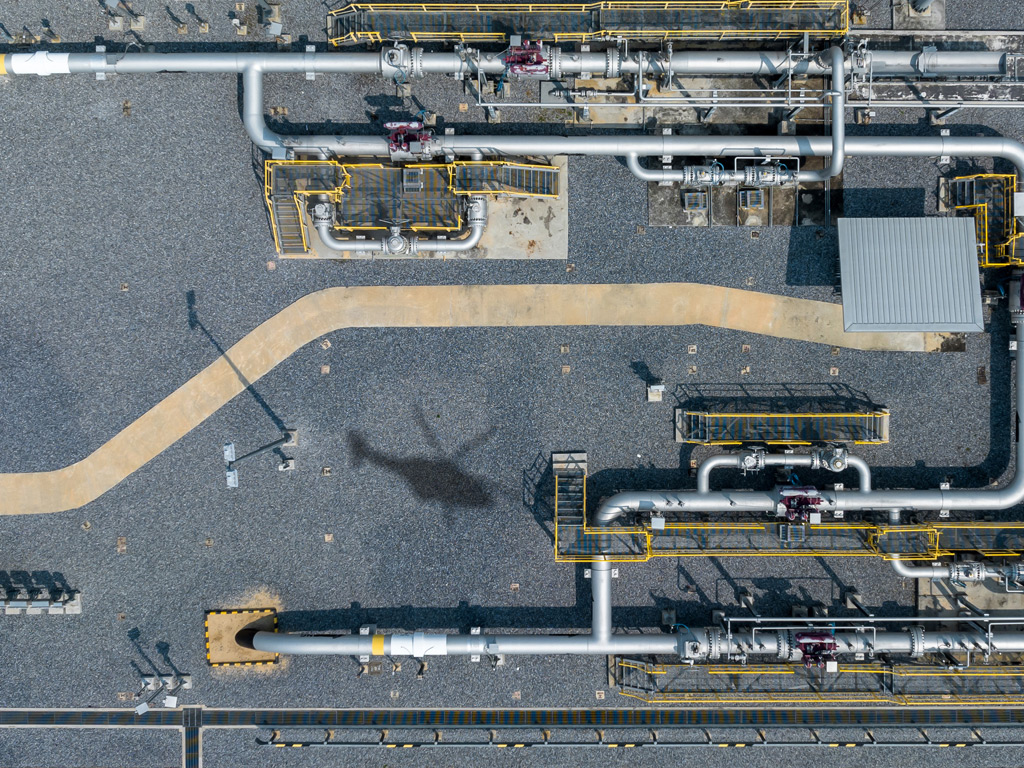
The MERR requirements for LDAR programs in 2026 centre on mandatory, frequency-based leak detection and repair surveys for gas infrastructure operators, backed by strict sensitivity thresholds, documentation obligations, and significant financial penalties for non-compliance. MERR, the EU Methane Emission Reduction Regulation (EU Regulation 2024/1787), entered into force in 2024, and its operational provisions are now fully binding on operators across Europe. Below, we break down the key questions every gas network operator needs answered before conducting their next survey.
What does MERR mean in the context of EU methane regulation?
MERR stands for the Methane Emission Reduction Regulation, the informal shorthand for EU Regulation 2024/1787. It is the European Union’s first dedicated legislative framework for controlling methane emissions from the energy sector, applying across the upstream, midstream, and downstream segments of the gas value chain. For pipeline operators, it establishes binding obligations around leak detection, measurement, and reporting that were previously either voluntary or governed by national standards alone.
The regulation was designed to align European methane management with international climate commitments and to bring the EU’s gas sector emissions under systematic, verifiable control. Its structure follows a tiered approach, distinguishing between different types of equipment and infrastructure, and assigning inspection requirements accordingly. The LDAR provisions, which are most relevant to transmission and distribution network operators, are among the most operationally demanding elements of the entire regulation.
Understanding MERR as a legal baseline is important because it supersedes or supplements existing national frameworks. Operators who previously relied on national inspection standards or voluntary programmes cannot assume those meet the new EU-level requirements without a careful gap analysis.
Which operators are subject to MERR LDAR obligations in 2026?
In 2026, MERR LDAR obligations apply to operators of gas transmission pipelines, distribution networks, and associated infrastructure across EU member states. This includes Transmission System Operators (TSOs) managing high-pressure long-distance pipelines, as well as Distribution System Operators (DSOs) responsible for regional and local gas grids. Operators of compressor stations, metering points, and interconnection facilities are also within scope.
The regulation covers both onshore and certain offshore infrastructure, though the most immediate compliance pressure falls on the extensive onshore pipeline networks that form the backbone of European gas supply. Europe’s 43 TSOs collectively operate around 200,000 km of transmission pipelines across 25 countries, and each of these organisations falls squarely within MERR’s scope.
It is worth noting that MERR’s obligations extend beyond asset owners to operators in the functional sense. If a company operates infrastructure on behalf of an owner, the operational compliance responsibility attaches to the entity in operational control. Operators should review their contractual arrangements to confirm where LDAR compliance accountability sits within their structures.
What are the specific LDAR survey frequency requirements under MERR?
Under MERR, LDAR survey frequency depends on the equipment type and pressure class, but the regulation has materially shortened inspection intervals compared to previous practice. For above-ground components at high-pressure transmission sites, annual inspections are required. For underground equipment, the frequency requirements are tied to equipment classification, with some categories requiring surveys every two to three years rather than the longer cycles many operators previously used.
One of the most significant operational impacts of MERR is that the shortened intervals effectively double the survey workload for operators who were previously inspecting on five-year or longer cycles. This is not a marginal adjustment. For a TSO managing thousands of kilometres of pipeline, compressing inspection intervals while maintaining full geographic coverage demands faster, higher-throughput survey technology.
The regulation also introduces requirements for follow-up inspections after a leak is detected, with timelines for repair or replacement that vary depending on leak severity. Operators cannot simply log a detection and schedule a repair at their convenience. MERR creates enforceable repair deadlines, meaning the speed of detection and the speed of remediation are both now regulatory concerns, not just operational ones.
What detection sensitivity thresholds must LDAR surveys meet?
MERR sets minimum detection sensitivity thresholds that LDAR survey methods must achieve to be considered compliant. For Type 2 surveys covering underground equipment, the regulation requires systems capable of detecting methane leaks at levels consistent with high-sensitivity remote measurement, ruling out lower-grade detection approaches that might miss small but persistent leaks. The specific thresholds are defined in terms of detectable leak rates under defined wind and atmospheric conditions.
These sensitivity requirements are technically demanding, and not all survey methods qualify. Traditional walking surveys using hand-held detectors can satisfy certain equipment categories, but for large-scale pipeline corridor inspections, the regulation’s combination of sensitivity requirements and frequency obligations effectively necessitates advanced aerial or vehicle-mounted systems capable of covering ground quickly without sacrificing detection performance.
The DVGW standard, Germany’s technical framework for gas infrastructure, has long served as a benchmark for detection quality in central Europe. MERR’s sensitivity thresholds are broadly consistent with this level of rigour, meaning operators familiar with DVGW-compliant surveys have a useful reference point for understanding what MERR demands technically.
What reporting and documentation does MERR require from operators?
MERR requires operators to maintain comprehensive records of all LDAR surveys conducted, including the date, method, equipment covered, detection results, and any follow-up actions taken. These records must be retained for a defined period and made available to competent national authorities upon request. The regulation also introduces transparency obligations, with operators required to report aggregated methane emissions data through national channels that feed into EU-level monitoring frameworks.
Documentation requirements under MERR are more granular than many operators will have experienced under previous national regimes. Survey reports must capture not only whether a leak was found but also the quantitative measurement data that demonstrates the survey met the required sensitivity threshold. This means operators need survey providers who can deliver georeferenced, quantified results rather than simple pass/fail outputs.
The reporting chain also connects to the EU’s broader methane transparency tools, which are designed to give regulators and the public visibility into emissions performance across the sector. Operators should treat their LDAR documentation as a long-term compliance asset, not just an operational record, since it may be scrutinised during audits or enforcement reviews.
What are the penalties for non-compliance with MERR in 2026?
MERR gives member states the authority to impose penalties for non-compliance, and the regulation explicitly requires those penalties to be effective, proportionate, and dissuasive. Fines can reach up to 20% of an operator’s annual turnover, making MERR one of the most financially consequential environmental regulations the European gas sector has faced. Repeated or deliberate violations can attract higher sanctions, and member states may also suspend operating licences in serious cases.
The 20% turnover threshold is not a theoretical maximum reserved for catastrophic failures. It is the ceiling set by the regulation as a deliberate signal that methane compliance is treated with the same seriousness as other major regulatory obligations. For a mid-sized DSO with annual revenues in the hundreds of millions of euros, even a fraction of that penalty would represent a material financial event.
Beyond direct fines, non-compliance carries reputational and operational risks. Operators found to have failed their LDAR obligations may face increased regulatory scrutiny, mandatory audits, and reputational damage with regulators, investors, and the public. In an environment where ESG performance increasingly influences financing conditions, methane compliance is also a balance-sheet issue, not just a regulatory one. Operators who treat LDAR as a box-ticking exercise rather than a genuine emissions management programme are taking on risks that extend well beyond the immediate penalty.
How ADLARES supports MERR LDAR compliance for gas network operators
Meeting MERR’s LDAR requirements at scale requires a survey solution that combines high detection sensitivity, rapid coverage, and audit-ready reporting. That is precisely what we at ADLARES deliver through our CHARM® airborne gas leak detection technology, the world’s only DVGW-approved gas remote detection system.
Here is how we help gas transmission and distribution operators meet their MERR obligations in practice:
- High sensitivity detection: CHARM® can detect leakage rates from as low as 150 litres per hour, meeting the sensitivity thresholds required for MERR Type 2 compliance for underground equipment.
- Rapid large-scale surveys: Flying at speeds of up to 180 km/h at altitudes of 100 to 150 metres, our helicopter-based system can cover thousands of kilometres of pipeline corridor efficiently, helping operators meet shortened inspection intervals without expanding their survey calendar indefinitely.
- Georeferenced, quantified results: Survey outputs are delivered through a secure Web GIS platform, accessible on desktop and mobile, providing the georeferenced and quantified data that MERR’s documentation requirements demand.
- Proven track record: We have inspected over 250,000 km of gas pipelines across Europe for major grid operators, giving us deep operational familiarity with the compliance environments our clients work in.
- EU Methane Regulation alignment: Our airborne gas leak detection services are specifically designed to support compliance with EU Regulation 2024/1787, including the Type 2 survey requirements for underground infrastructure.
If your organisation is reviewing its LDAR programme ahead of upcoming survey cycles, we would welcome the conversation. Contact the ADLARES team to discuss how CHARM® can be integrated into your compliance planning for 2026 and beyond.
Dieser Inhalt wurde mithilfe von KI erstellt und kann Fehler enthalten.