
Methane detection is a critical part of keeping gas infrastructure safe and compliant with modern environmental regulations. Whether you work in pipeline operations, LDAR programme management, or energy infrastructure compliance, understanding the difference between active and passive CH4 detection methods helps you choose the right technology for the job. These two approaches differ fundamentally in how they sense methane, how sensitive they are, and how well they perform in real-world field conditions.
What is active vs. passive CH4 detection?
Active and passive CH4 detection are two distinct approaches to identifying methane in the atmosphere. Active detection means the instrument generates its own energy source, typically a laser, and measures how that energy interacts with methane molecules in the air. Passive detection relies on ambient energy, usually sunlight or thermal radiation naturally emitted by objects, to identify methane by the way it absorbs or emits radiation at characteristic wavelengths. The core distinction is simple: active systems bring their own light source, while passive systems depend on what is already present in the environment.
How does active methane detection work?
Active methane detection systems emit controlled pulses of laser light at specific wavelengths and analyse the returning signal to determine whether methane is present in the measurement path. The most technically advanced form of active detection used in pipeline inspection is Differential Absorption LIDAR (DIAL), which fires two laser pulses at slightly different wavelengths. One wavelength is strongly absorbed by methane, the other is not. By comparing the two return signals, the system calculates the concentration of methane along the laser path with very high precision.
Because active systems generate their own light source, they are not dependent on sunlight or ambient conditions. They can operate at night, in overcast weather, and at altitude, which makes them well suited to airborne methane detection services from helicopters. Active DIAL systems operating in the mid-infrared range, around 3.3 micrometres, target the wavelength at which methane molecules most strongly absorb laser energy, delivering extremely high sensitivity even at low concentrations.
Key characteristics of active detection include:
- Self-contained energy source independent of ambient light conditions
- Ability to measure column-integrated methane concentration along the laser path
- Very high measurement rates, enabling dense spatial coverage at speed
- Quantitative output expressed as concentration path length, for example in ppm·m
- Suitability for airborne platforms covering large areas rapidly
How does passive methane detection work?
Passive methane detection systems do not generate their own energy. Instead, they capture naturally occurring radiation and look for the spectral signature of methane within it. The most common passive approach used in field inspection is Optical Gas Imaging (OGI), which uses a thermal infrared camera sensitive to the wavelengths at which methane absorbs or emits radiation. When methane is present, it appears as a visible cloud or plume in the camera image, allowing an operator to identify a leak visually.
Passive methods are generally simpler and less expensive than active laser-based systems. Handheld OGI cameras, for example, are widely used for close-range inspection of above-ground components such as valves, flanges, and compressor stations. However, passive detection has important limitations. Performance depends heavily on ambient conditions, including temperature contrast between the gas plume and the background, wind speed, and available thermal radiation. In low-contrast conditions, sensitivity drops significantly.
Common passive detection tools include:
- Optical Gas Imaging cameras for visual leak identification at close range
- Handheld flame ionisation detectors and catalytic bead sensors for contact-based screening
- Passive infrared sensors for fixed monitoring installations
- Satellite-based passive infrared instruments for large-scale emission monitoring
What are the key differences between active and passive CH4 detection?
The differences between active and passive detection go beyond just the energy source. They affect sensitivity, operational range, weather dependence, and the type of data each method produces.
Sensitivity is one of the most significant distinctions. Active DIAL systems can achieve per-point detection limits below 1 ppm·m, while passive OGI cameras typically require a higher local concentration to produce a visible signal. Under the EU Methane Regulation, Type-2 inspections require a detection threshold of 5 g/h or 1,000 ppm local concentration, a level that demands more sophisticated technology than standard OGI. Type-1 inspections set a threshold of 17 g/h or 7,000 ppm, which is achievable with OGI cameras and less sensitive handheld tools.
Operational independence is another key difference. Active systems function regardless of daylight, cloud cover, or temperature contrast. Passive systems, particularly thermal OGI cameras, perform best when there is a clear temperature differential between the gas and its background. In cold, overcast, or thermally uniform conditions, passive detection becomes less reliable.
Survey speed and coverage also differ substantially. Active airborne systems can cover hundreds of kilometres of pipeline per day from a helicopter. Passive methods, when deployed on foot or from slow-moving vehicles, cover far less distance in the same time.
A summary of the key differences:
- Energy source: Active systems use lasers; passive systems use ambient radiation
- Sensitivity: Active DIAL achieves lower detection limits than most passive methods
- Weather dependence: Active systems are weather-independent; passive systems are affected by ambient conditions
- Survey speed: Active airborne detection covers large areas rapidly; passive methods are slower and more labour-intensive
- Output data: Active systems produce quantitative concentration measurements; passive OGI produces visual imagery
Which CH4 detection method is better for pipeline inspection?
For large-scale pipeline inspection, active detection using airborne DIAL technology offers significant advantages over passive methods. Underground pipelines present a particular challenge: gas that escapes from a buried pipe travels through soil before reaching the surface, often emerging metres away from the actual leak point and dispersing into a wider plume. Reliable detection requires a grid of measurement points covering at least 10 metres on either side of the pipeline centreline, not just a string of points directly above it.
Passive OGI cameras are highly effective for above-ground equipment inspection at close range, where the operator can position the camera to capture a visible plume against a suitable background. For buried infrastructure surveyed from altitude, however, the physics of passive detection make it far less reliable. The signal is weaker, the plume is diluted, and ambient conditions have a much greater influence on what the camera can resolve.
The choice of method also has regulatory consequences. Under the EU Methane Regulation, operators who invest in more sensitive Type-2 technology benefit from extended inspection intervals, inspecting underground pipelines once every three years rather than more frequently. This creates a direct economic incentive to use higher-sensitivity active detection technology rather than less sensitive passive alternatives. You can learn more about how different methane detection approaches compare in terms of regulatory compliance and operational efficiency.
What regulations require methane detection on gas pipelines?
The primary regulatory framework governing methane detection on gas pipelines in Europe is EU Methane Regulation 2024/1787, which came into force and began shaping operator obligations from 2025 onward. The regulation requires gas transmission and distribution operators to conduct regular Leak Detection and Repair (LDAR) surveys on their infrastructure, including underground pipelines.
The regulation defines a two-step LDAR methodology. Step 1 is surface screening, which identifies locations that warrant further investigation. Step 2 is source confirmation, carried out after excavation or bar-hole drilling, which directly measures emission rates at the source and triggers the repair obligation when the 1,000 ppm or 5 g/h threshold is met. Aerial detection platforms serve as efficient Step 1 tools, delivering GPS-tagged anomaly reports that direct ground teams to prioritised investigation zones.
Until the forthcoming Implementing Act sets specific detection thresholds for aerial Stage 1 surveys, Article 14(7) of the regulation requires operators to use the best available technologies and detection techniques. Certification under standards such as DVGW G465-4-5 (formerly G501) currently satisfies this requirement. This standard is the world’s only technical certification for aerial pipeline inspection and has required detection of leaks at approximately 150 g/h under real operating conditions since 2012.
In Germany and across Europe, the DVGW technical standards provide the operational framework for gas network inspection. Operators choosing certified active detection technology not only meet current regulatory requirements but also position themselves well for the stricter thresholds expected in the Implementing Act.
How ADLARES helps with airborne methane detection
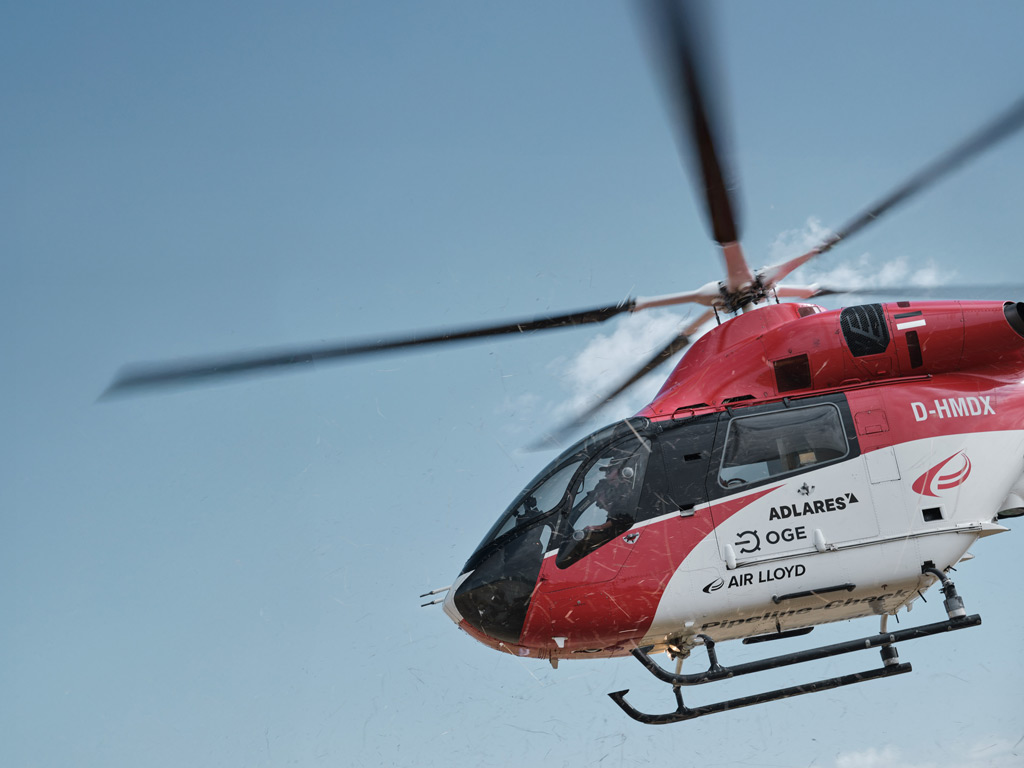
We at ADLARES have been providing certified airborne methane detection services since 2008, and to date we have inspected over 250,000 km of gas pipelines across Europe. Our CHARM technology is the world’s only DVGW-certified aerial gas detection system, independently verified to detect surface concentrations of 300 ppm in a 2×2 m area under all certified flight altitudes and wind conditions. This makes it fully compliant with EU Methane Regulation Type-2 requirements for underground equipment.
Here is what working with us looks like in practice:
- Rapid large-scale coverage: Our helicopter-mounted DIAL system surveys pipelines at speeds of up to 180 km/h, covering extensive grid networks efficiently
- High measurement density: 1,000 measurements per second across a 24 to 25 metre scan swath, with active pipeline tracking keeping deviation below 0.5 m from the centreline
- Quantitative, georeferenced results: Every anomaly is GPS-tagged with localisation accuracy better than 2 m, delivered via a secure Web GIS platform accessible on desktop and mobile
- Regulatory compliance: CHARM meets the Type-2 sensitivity threshold under EU Methane Regulation 2024/1787, qualifying operators for the extended three-year inspection interval on underground pipelines
- Targeted ground follow-up: Our anomaly reports direct your ground teams only to prioritised zones, reducing the total route length requiring on-foot investigation
If you want to understand how our airborne pipeline inspection services can support your LDAR programme and help you meet your EU Methane Regulation obligations, get in touch with our team today. We are happy to discuss your network, your compliance timeline, and the best approach for your infrastructure.
Dieser Inhalt wurde mithilfe von KI erstellt und kann Fehler enthalten.