
Gas pipelines run beneath roads, fields, urban streets, and construction sites. In many cases, the people working above ground have no idea what lies beneath their feet. When a mechanical excavator, a drill, or even a hand tool strikes a buried pipeline, the consequences can range from a slow methane leak to a serious safety incident. Third-party damage is consistently identified across Europe and beyond as one of the most significant causes of pipeline failures, and understanding why it happens is the first step toward managing the risk effectively.
What is third-party damage to pipelines?
Third-party damage refers to any physical harm caused to a pipeline by an individual or organisation that is not the pipeline operator. This typically means construction crews, utility contractors, agricultural workers, or landowners who disturb the ground near a buried pipeline without adequate knowledge of what is below. The damage can be immediate and catastrophic, such as a full rupture, or it can be subtle, such as a dent, gouge, or coating scratch that weakens the pipe wall and leads to a leak weeks or months later. Because the harm is caused by someone outside the operator’s direct control, it is one of the more difficult threats to prevent through internal management alone.
Why is third-party damage the leading cause of pipeline leaks?
Across Europe, third-party interference consistently ranks as the primary cause of gas transmission pipeline incidents. Several factors explain why this threat is so persistent. Buried pipelines are invisible to those working above ground, and pipeline route markers are not always visible, understood, or respected. Urban expansion and infrastructure development have steadily brought construction activity closer to existing pipeline corridors. At the same time, the volume of ground-disturbing work has increased significantly over recent decades, driven by fibre optic rollouts, district heating networks, electric vehicle charging infrastructure, and general urban renewal projects.
The risk is compounded by the fact that many contractors are unaware that a pipeline exists in the area, or they underestimate the depth at which it is buried. Shallow cover, ground subsidence, or previous undocumented work can all reduce the separation between a pipeline and the surface, making it more vulnerable. Even where one-call or dig-safe systems exist, not all contractors use them consistently, and the information they provide is not always accurate or up to date.
What types of activities most commonly cause third-party pipeline damage?
The most frequent causes of third-party pipeline damage fall into a recognisable set of categories:
- Mechanical excavation: Backhoes, excavators, and trenching machines are responsible for the majority of third-party incidents. A single pass of a bucket can sever or deform a pipeline in seconds.
- Agricultural work: Deep ploughing, subsoiling, and drainage work in rural areas can reach pipelines that were originally buried at a safe depth but have shifted closer to the surface over time.
- Road and utility construction: Projects that involve breaking up road surfaces or installing new underground services frequently encounter existing pipelines, especially in areas where records are incomplete.
- Horizontal directional drilling: Trenchless techniques used to install cables or pipes can intersect a gas pipeline if the route has not been accurately surveyed beforehand.
- Anchor drops and marine activity: For offshore or river-crossing pipelines, vessel anchors and trawling gear represent an equivalent third-party risk.
In many cases, the damage is not reported immediately. A contractor who nicks a coating or causes a minor dent may not realise the significance of what has happened, and the pipeline operator may not discover the problem until a routine inspection or a gas escape is reported by a member of the public.
How does third-party damage lead to methane leaks?
When a steel pipeline is struck or deformed, the integrity of the pipe wall is compromised. Even a small gouge or scratch in the protective coating can initiate corrosion at an accelerated rate, eventually leading to a perforation. A more severe impact can create an immediate crack or hole through which gas escapes directly. At transmission pressures above 5 bar, even a small defect in a steel pipe will drive a measurable flow of methane into the surrounding soil. Research into the physical properties of high-pressure steel pipelines shows that the minimum emission rate from such a defect is approximately 150 litres per hour, equivalent to around 110 grams of methane per hour. This is not a regulatory threshold but a physical constraint determined by the material and pressure conditions involved.
Once methane enters the soil, it migrates laterally and upward, forming a diffuse plume at the surface that may be displaced from the actual leak location depending on soil permeability and structure. This migration behaviour is why surface-based detection needs to cover a wide corridor around the pipeline route rather than a single line directly above it. Studies by independent research institutes confirm that underground gas plumes can widen substantially before reaching the surface, meaning the visible or detectable signal may appear metres away from the actual point of damage.
How can pipeline operators detect leaks caused by third-party damage?
Detecting leaks that result from third-party damage requires both a systematic inspection programme and the ability to respond quickly when a new incident occurs. Several detection approaches are available to operators:
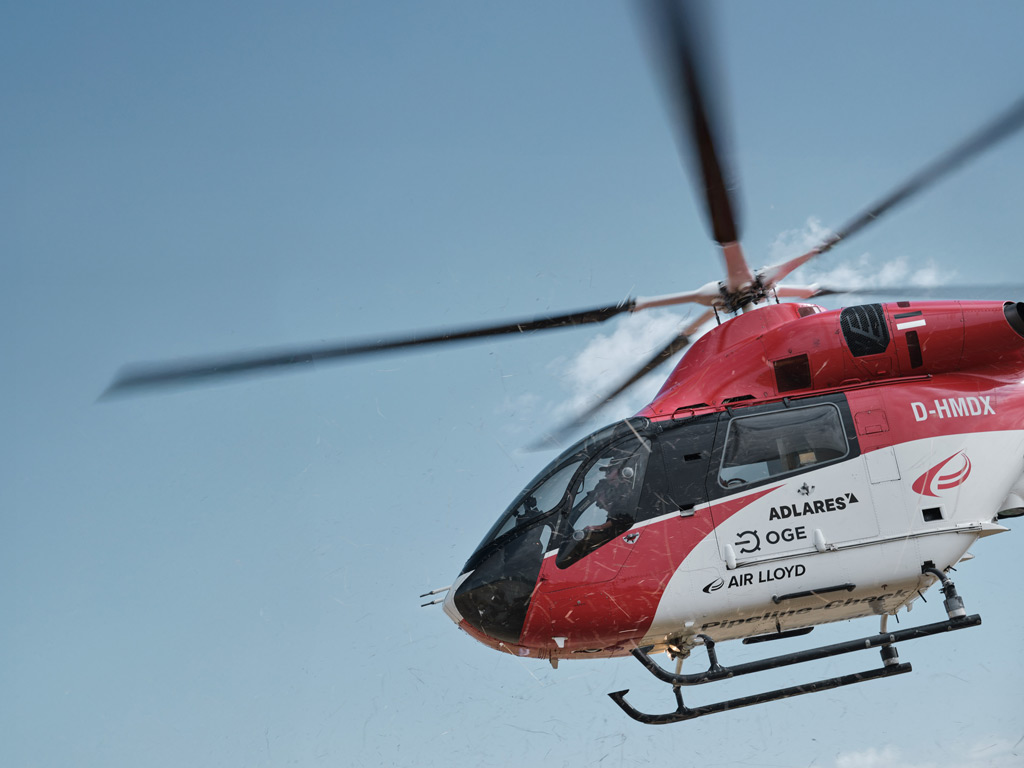
- Airborne laser-based surveys: Helicopter-mounted systems using Differential Absorption LIDAR technology can screen large pipeline networks at high speed, detecting methane plumes at the surface with high sensitivity. This approach is well suited to covering long-distance transmission routes efficiently.
- Vehicle-based surveys: Flame ionisation detectors or laser instruments mounted on vehicles can screen roads and tracks running parallel to or crossing pipeline routes, though coverage is limited to accessible areas.
- On-foot inspection: Technicians walking the pipeline route with handheld instruments can identify gas indications at ground level, particularly in areas where vehicle or airborne access is restricted.
- Continuous monitoring systems: Pressure and flow monitoring within the pipeline network can flag anomalies that suggest a significant leak, though they are less effective at detecting smaller, slow-developing emissions.
A two-stage approach is increasingly standard practice. An initial screening survey identifies anomaly zones along the route. Ground teams then focus their effort on those specific locations to confirm the source and assess the severity before repair decisions are made. This structure is also consistent with the methodology set out in current European regulatory requirements for underground pipeline inspection.
Speed matters when third-party damage is involved. A fresh impact may produce a leak that grows over time as the defect widens under pressure. Gas pipeline inspection services that can deliver findings quickly after a survey flight allow operators to prioritise ground follow-up without delay.
What regulations require operators to address third-party damage risks?
Pipeline operators across Europe face a growing body of regulation that directly addresses the need to detect and repair leaks, including those caused by third-party interference. The EU Methane Regulation requires operators of underground pipelines to establish and maintain Leak Detection and Repair programmes. The first Type-2 LDAR survey was required to be completed by August 2025, and operators must now maintain ongoing inspection cycles at intervals determined by the sensitivity of their chosen detection technology.
Under Article 14 of the regulation, a repair obligation is triggered when a confirmed leak at source exceeds 1,000 parts per million or 5 grams per hour. All identified leaks, regardless of size, must be recorded and those records retained for a minimum of ten years. The regulation also requires operators to move away from estimate-based emission accounting toward direct measurement at source level, which means that damage-related leaks must be identified and quantified individually rather than absorbed into generic network loss figures.
Beyond the EU Methane Regulation, national technical standards such as DVGW G465-4-5 in Germany set binding requirements for the performance of inspection systems used on underground gas pipelines. These standards define minimum detection thresholds, required detection probabilities, and operational limits within which a certified system must be able to perform. Compliance with such standards provides operators with a defensible basis for their inspection programme and supports regulatory reporting requirements.
How ADLARES helps operators manage third-party damage risks
We offer a complete airborne gas leak detection service built around CHARM®, the world’s only DVGW-certified aerial inspection system for underground gas pipelines. For operators concerned about third-party damage, our service provides several concrete advantages:
- High-speed network screening: Our helicopter surveys cover pipelines at up to 180 km/h, allowing large network segments to be inspected rapidly after a suspected third-party incident or as part of a regular LDAR programme.
- Certified detection sensitivity: CHARM® detects leaks from 150 litres per hour under real operating conditions, meeting the physical minimum for genuine leaks in high-pressure steel pipelines and satisfying the requirements of DVGW G465-4-5.
- Fast reporting: For spatially localised gas clouds with high concentrations, we issue prompt indications within 12 hours of landing, allowing ground teams to respond without waiting for the full survey report. Standard gas reports follow within 10 working days.
- GPS-tagged findings: Every gas indication is delivered with precise coordinates, an aerial photo with measurement overlay, and wind data, giving ground teams exactly what they need to locate and assess the source.
- EU Methane Regulation compliance: Our service supports the Type-2 LDAR survey requirement and provides the source-level data needed for regulatory reporting under Article 14.
- Non-relevant finding exclusion: Our experienced data crew filters out signals from biogas plants, wastewater facilities, and other non-pipeline sources, so the findings you receive relate specifically to your infrastructure.
If you operate gas pipelines and want to understand how airborne inspection can strengthen your response to third-party damage risks, contact us at ADLARES to discuss your network and inspection requirements. Our team is ready to help you design a survey programme that meets your regulatory obligations and protects your infrastructure.
Dieser Inhalt wurde mithilfe von KI erstellt und kann Fehler enthalten.