
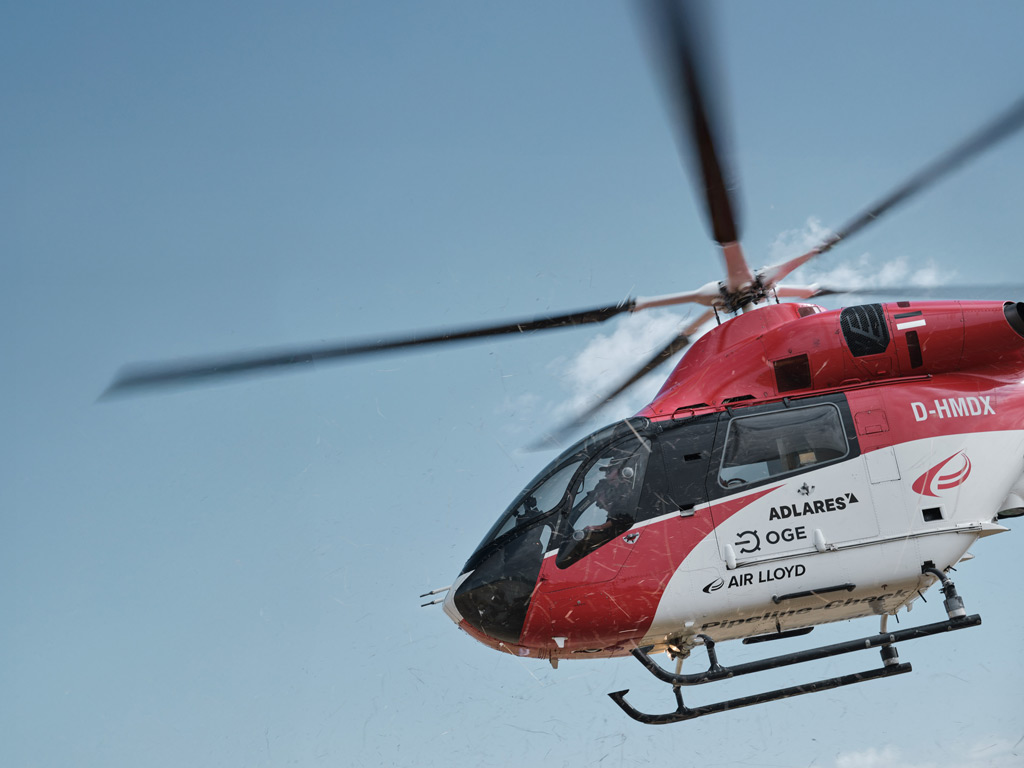
Measuring methane emissions accurately is no longer optional for gas grid operators in Europe. The EU Methane Regulation (EU 2024/1787) sets out legally binding requirements for how operators must detect, quantify, and report methane leaks across their infrastructure. Whether you manage underground transmission pipelines or above-ground compressor stations, understanding what the regulation demands and how modern methane leak detection technology meets those demands is essential for compliance planning in 2026 and beyond.
What does the EU Methane Regulation require for emissions measurement?
The EU Methane Regulation requires gas infrastructure operators to carry out structured Leak Detection and Repair (LDAR) programmes across both underground and above-ground assets. For underground pipelines, the regulation defines a two-step inspection methodology: a surface screening phase to identify anomalies, followed by ground-level source confirmation to trigger repair decisions. For above-ground facilities such as compressor stations and metering stations, operators must perform both source-level identification of individual emission points and site-level total quantification to verify that no emissions are going unaccounted for.
This dual approach for above-ground assets reflects the OGMP 2.0 Level 5 Gold Standard, which requires operators to reconcile bottom-up source data with top-down site measurements. All EU assets must reach this Level 5 standard by August 2028. The reconciliation process is critical because discrepancies between the two figures reveal unaccounted emissions or miscalibrated source estimates, driving continuous improvement in data quality.
While the regulation sets a clear framework, one key element is still being finalised. The Implementing Act, currently under public consultation, will define specific detection thresholds and inspection intervals for aerial Stage 1 screening. In the interim, Article 14(7) of the regulation sets the legal standard: operators must use the best available technologies and the best available detection techniques, in compliance with manufacturer specifications. Technologies holding rigorous third-party certification such as DVGW G465-4-5 directly satisfy this interim requirement.
What are the different types of LDAR surveys under the regulation?
The EU Methane Regulation distinguishes two inspection classes, each with different sensitivity requirements and monitoring intervals.
- Type-1 inspections require a detection limit of 17 g/h emission rate, or a local concentration of 7,000 ppm. This sensitivity level is suitable for Optical Gas Imaging (OGI) cameras used at close range or less sensitive handheld detection equipment.
- Type-2 inspections require a detection limit of 5 g/h, or 1,000 ppm local concentration. This is a significantly more demanding threshold, requiring more sophisticated equipment. The ratio between the two ppm thresholds is a factor of seven.
Because Type-2 inspections use more sensitive technology, they are rewarded with longer inspection intervals. For underground pipelines, the Type-2 monitoring interval is once every three years, compared to more frequent requirements for Type-1 surveys. This structure gives operators a concrete economic incentive to invest in better technology. The higher upfront cost of more sensitive equipment is directly offset by the reduced frequency of required inspections, making the business case for advanced technology straightforward.
Within the underground inspection process, the two-step LDAR methodology also has a clear division of roles. Step 1 is surface screening at the ground-to-atmosphere interface, determining where further investigation is warranted. Step 2 is source confirmation after ground access is opened, reliably quantifying the emission rate. The repair obligation under Article 14(8) is only triggered at Step 2, when the 1,000 ppm / 5 g/h threshold is confirmed at the source.
How does airborne methane detection work for pipeline surveys?
Airborne methane detection uses laser-based remote sensing technology to scan large stretches of pipeline corridor from a helicopter, identifying methane concentrations at the ground-to-atmosphere interface without requiring ground access. The most advanced systems use the Differential Absorption LIDAR (DIAL) method, which emits two laser pulses at different wavelengths to identify the characteristic light absorption signature of methane.
A critical detail that is often overlooked is how underground gas plumes actually behave. Research by METEC (Methane Emissions Technology Evaluation Center) and the Engler-Bunte Institute demonstrates that underground emissions do not always emerge directly above the leak. Gas travels through the soil and the plume widens before reaching the surface, meaning the emission area above ground can be significantly broader than the pipeline corridor itself. For reliable detection, any aerial technology must therefore meet two requirements:
- A grid of measurement points must cover the entire area on either side of the pipeline, extending at least 10 metres from the centreline with spatial resolution better than 2 metres.
- Each measurement point must reliably detect a concentration level of 1,000 ppm, meaning the system’s per-point sensitivity must be at least three times better than that threshold to ensure reliability under all allowable environmental conditions, not just ideal conditions.
Technology that produces only a string of measurement points directly along the pipeline centreline cannot reliably detect real leaks, because it will miss plumes that have migrated laterally through the soil. A true grid-based scan covering the full corridor is what pipeline inspection services need to deliver for the results to be operationally meaningful.
Does airborne LIDAR detection meet EU Methane Regulation Type 2 requirements?
Yes, but only when the system in question has been independently verified to meet the 5 g/h / 1,000 ppm detection threshold under real-world conditions. Certification cannot be self-declared. DVGW, the German technical and scientific association for gas and water, operates an independent verification process using a test bed that simulates underground emissions at controlled flow rates. FID (Flame Ionisation Detector) sensors above ground measure the methane concentration released from below the surface, and tests are carried out at all certified flight altitudes and under all allowable environmental conditions.
The importance of sensitivity headroom cannot be overstated. A system that just barely meets the 1,000 ppm threshold under ideal conditions will fail to detect reliably when wind speeds increase, atmospheric conditions shift, or soil structure causes the plume to disperse further. Verified sensitivity at 300 ppm, which is three times more sensitive than the required threshold, ensures that the 1,000 ppm detection requirement is met consistently across all conditions. This is what DVGW G465-4-5 certification verifies.
The economic logic reinforces the technical case. Under the two-class regulatory framework, operators using Type-2 certified technology can inspect underground pipelines once every three years rather than more frequently. This longer interval directly offsets the higher cost of more sensitive equipment and creates a market incentive to develop and deploy better systems, which is precisely what the EU Methane Regulation intends to achieve.
How are methane leak survey results reported and verified?
Certified reporting is not a bureaucratic formality. It is operational confirmation that a system has performed at the level the regulation requires and that the inspection coverage is complete and evidenced. For operators, this matters in two distinct ways: it documents where potential leaks have been identified, and it provides verifiable proof that all infrastructure has been thoroughly screened.
Survey results from airborne methane monitoring inspections are typically delivered through secure digital platforms that allow grid operators to review GPS-tagged anomaly reports, verify indications, and assign ground investigation teams to prioritised zones. This workflow integrates directly with the two-step LDAR methodology: aerial screening generates the anomaly reports that trigger Step 2 ground investigation, reducing the total route length requiring on-foot inspection to the specific zones that warrant it. The result is a significant reduction in cost and effort compared to blanket on-foot surveys of entire pipeline corridors.
For above-ground facilities, reporting must capture both source-level emission data and total site quantification, enabling the reconciliation required under OGMP 2.0 Level 5. When the two figures align, operators have confidence in their data. When they diverge, the discrepancy itself is valuable information, pointing to unaccounted emission sources that need investigation.
What is the most efficient way to inspect large pipeline networks for methane leaks?
For large pipeline networks spanning hundreds or thousands of kilometres, the most efficient approach combines aerial Stage 1 screening with targeted ground follow-up. Aerial surveys can cover pipeline corridors at speeds of up to 180 km/h, generating a dense grid of measurement points across the full width of the corridor in a single pass. This dramatically reduces the time and cost of initial screening compared to vehicle-based or on-foot surveys of the same corridor length.
The efficiency gain compounds when aerial screening is Type-2 certified, because the three-year inspection interval means operators cover the same network less frequently. Networks that previously required annual or biennial on-foot surveys can transition to a three-year aerial inspection cycle, with ground teams deployed only to the specific anomaly zones identified from the air. This targeted approach concentrates repair effort where it is genuinely needed, rather than distributing it uniformly across the entire network.
For above-ground sites such as compressor stations, a single airborne survey can simultaneously map individual emission sources and quantify total site emissions, delivering both layers of data required for OGMP 2.0 Level 5 reconciliation without the need for separate measurement campaigns. EU methane regulation compliance is therefore not just a matter of meeting detection thresholds; it is about integrating the right technology into an inspection workflow that is both technically rigorous and operationally practical.
How ADLARES helps with EU Methane Regulation compliance
We have been developing and operating airborne methane detection technology since 2001, and our CHARM® system is the world’s only DVGW-approved gas remote detection system certified for Type-2 inspections under the EU Methane Regulation. With over 250,000 km of gas pipelines inspected across Europe, we bring both the technical credentials and the operational experience that grid operators need to meet their compliance obligations efficiently.
Here is what working with us delivers:
- Type-2 certified detection at 5 g/h / 1,000 ppm, with verified sensitivity headroom at 300 ppm to ensure reliable performance under all allowable environmental conditions.
- Full corridor grid scanning extending at least 10 metres either side of the pipeline centreline, meeting the spatial coverage requirements established by METEC and Engler-Bunte Institute research.
- Three-year inspection intervals for underground pipelines, directly reducing the frequency and total cost of your LDAR programme.
- Site-level quantification for above-ground facilities, delivering both source-level and total site emissions data in a single airborne survey for OGMP 2.0 Level 5 reconciliation.
- Certified reporting delivered via a secure Web GIS platform, providing GPS-tagged anomaly reports that integrate directly into your ground investigation workflow.
If you are planning your LDAR programme for 2026 or preparing for the Implementing Act requirements, we are ready to help. Get in touch with our team to discuss how CHARM® can fit into your inspection strategy and what a compliant, cost-efficient survey programme looks like for your network.
Dieser Inhalt wurde mithilfe von KI erstellt und kann Fehler enthalten.