
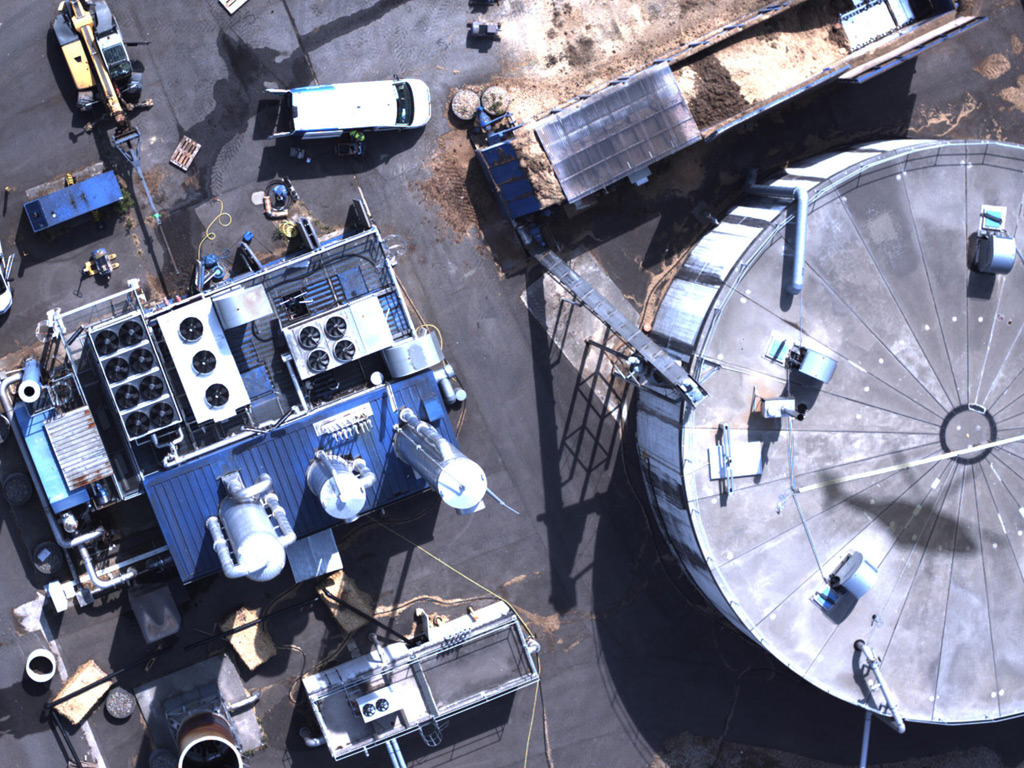
Methane emissions from gas infrastructure are rarely uniform. While most leaks are small and manageable, a small number of sources release disproportionately large volumes of methane into the atmosphere. These are known as super-emitters, and understanding what they are, where they come from, and how they are found is increasingly important for both environmental compliance and pipeline safety.
The term has moved from academic research into mainstream regulatory language, especially as the EU Methane Regulation pushes gas operators toward more rigorous, source-level emissions monitoring. Whether you work in pipeline operations, environmental compliance, or energy policy, knowing how super-emitters are defined and detected is essential context for 2026 and beyond.
What is a super-emitter in the context of methane emissions?
A super-emitter is an individual source that releases methane at a rate significantly higher than what is typical for its asset class. There is no single universally fixed threshold, but the term is commonly used to describe sources emitting at rates orders of magnitude above the average leak in a given network or sector.
In pipeline infrastructure, a super-emitter might be a single corroded joint, a faulty valve, or a damaged seal releasing hundreds or even thousands of grams of methane per hour. What makes them notable is the disproportion: a handful of super-emitters in a network can account for the majority of total methane losses, while the vast majority of components contribute very little. This heavy-tailed distribution is well documented across oil and gas infrastructure globally and is a key reason why targeted detection matters so much.
Why do methane super-emitters matter for climate change?
Methane is a potent greenhouse gas. Over a 20-year period, it has a warming effect roughly 80 times greater than carbon dioxide. This means that even relatively short-lived methane releases from infrastructure can have an outsized near-term climate impact.
Because super-emitters account for a disproportionate share of total emissions from a network, finding and fixing them delivers the greatest return on investment for emission reduction efforts. Addressing the top few percent of sources can often reduce a network’s total methane footprint by a substantial margin. This is precisely the logic underpinning source-level reporting requirements in the EU Methane Regulation, which requires Transmission System Operators to identify and quantify emissions at the level of individual sources rather than relying on aggregate estimates or generic emission factors.
What are the most common sources of super-emitter events on pipelines?
Super-emitter events on gas pipelines tend to cluster around specific failure modes and asset types. The most frequently identified sources include:
- Corroded or damaged pipe sections, particularly in older steel pipelines operating at medium or high pressure
- Faulty or aging valves and fittings, including pressure relief valves that fail to reseat properly after activation
- Poorly sealed joints or connections, especially at points where different pipe materials meet
- Compressor station components, including seals, flanges, and instrument connections that are subject to repeated pressure cycling
- Third-party damage from excavation or construction activity near buried pipelines
- Cathodic protection failures that allow corrosion to progress undetected over time
It is worth noting that underground leaks do not always surface directly above the pipe. Research from institutions including the Engler-Bunte Institute shows that gas migrates laterally through soil before reaching the surface, meaning the visible emission area can be displaced from the actual defect location. This has important implications for how detection surveys need to be designed.
How are super-emitters detected across large pipeline networks?
Detecting super-emitters across extensive pipeline networks requires a combination of coverage speed and measurement sensitivity. Traditional on-foot or vehicle-based surveys are thorough but slow, making it difficult to prioritise resources across thousands of kilometres of infrastructure.
Modern Leak Detection and Repair (LDAR) programmes typically use a two-step methodology. The first step is surface screening across the full pipeline route, identifying anomalies that warrant further investigation. The second step is ground-level source confirmation, where teams excavate or drill bar-holes to measure emissions directly at the source. The repair obligation under the EU Methane Regulation is triggered at this second step, when the emission rate at the source exceeds the defined threshold.
For the screening step, airborne methane detection has proven particularly effective over long transmission corridors. A helicopter-based system can cover large distances quickly, scanning a measurement grid on either side of the pipeline rather than just a single line of points above it. This grid-based approach is essential because underground plumes widen before reaching the surface, and a system that only measures directly above the pipe trace will miss a significant proportion of real leaks.
Reliable aerial detection requires per-point sensitivity well below the 1,000 ppm threshold specified for Type-2 inspections under the EU Methane Regulation, with spatial resolution better than 2 metres and coverage extending at least 10 metres on either side of the pipeline centreline.
What’s the difference between satellite and airborne methane detection?
Satellite-based methane detection has improved considerably in recent years and is genuinely useful for identifying very large emission events at a regional or continental scale. However, it has significant limitations when applied to pipeline LDAR programmes.
Current commercial satellites typically have a ground resolution of several metres to tens of metres per pixel, and their detection thresholds mean they can only reliably identify very large releases. Smaller but still significant leaks, including those in the range relevant to regulatory compliance, fall below the detection floor of most satellite systems.
Airborne detection operates at much lower altitude, typically between 100 and 180 metres above ground, which allows for far greater spatial resolution and measurement sensitivity. A properly certified airborne system can detect individual leaks at emission rates relevant to regulatory thresholds, deliver GPS-tagged anomaly reports, and cover hundreds of kilometres in a single survey day. Satellites and airborne systems are therefore best understood as complementary tools operating at different scales, not direct substitutes for one another.
How do operators act on super-emitter findings after a survey?
Once an airborne or vehicle-based screening survey identifies anomalies, the workflow moves to ground-level confirmation. Survey results are typically delivered as georeferenced reports, allowing operations teams to locate each flagged position precisely in the field.
Ground crews then carry out bar-hole drilling or excavation at prioritised locations to confirm whether a real leak is present and to measure the emission rate at the source. If the measured rate meets or exceeds the regulatory threshold, a repair obligation is triggered. This targeted approach means that on-foot inspection effort is concentrated on anomaly zones rather than distributed across the entire route, which significantly reduces the cost and time involved in follow-up work.
After repairs are completed, follow-up surveys confirm that the emission has been resolved and that the source-level data can be updated in the operator’s reporting system. This closed-loop process is central to achieving the kind of source-level emissions accounting required under OGMP 2.0 Level 5, which operators are expected to reach by August 2028.
How ADLARES helps identify and address methane super-emitters
We developed the CHARM® airborne methane detection system specifically for the challenge of finding real leaks, including super-emitters, across large and complex pipeline networks. Here is what we bring to the task:
- Grid-based scanning at 1,000 measurement points per second, covering the full corridor on either side of the pipeline at a spatial resolution that meets the requirements for reliable underground leak detection
- DVGW-certified Type-2 sensitivity, with a certified detection threshold of approximately 110 g/h, making CHARM® the world’s only DVGW-approved gas remote detection system and fully compliant with EU Methane Regulation Type-2 requirements
- Survey speeds of up to 180 km/h, enabling efficient coverage of long transmission corridors in a fraction of the time required by ground-based methods
- GPS-tagged anomaly reports delivered via a secure Web GIS platform, accessible on desktop and mobile so your operations teams can act immediately on findings
- Site-level emission quantification for above-ground facilities such as compressor stations, supporting both source-level identification and total site reconciliation in a single airborne survey
- Over 250,000 km of pipeline inspected across Europe for major gas grid operators, giving us the operational depth to handle complex network environments
If you are preparing for EU Methane Regulation compliance, building a robust LDAR programme, or simply need to understand where your largest emission risks are located, we are ready to help. Get in touch with our team to discuss how an airborne survey can be tailored to your network and regulatory timeline.
Dieser Inhalt wurde mithilfe von KI erstellt und kann Fehler enthalten.