
Gas leak detection has come a long way from walking a pipeline route with a handheld sniffer. Today, inspectors and grid operators have access to a range of technologies, each suited to different conditions, pipeline types, and regulatory requirements. One of the most widely recognised tools in the field is the optical gas imaging (OGI) camera, a device that makes invisible gas leaks visible to the human eye. But like any technology, it has a specific role to play, and understanding where it fits within a broader gas leak detection and pipeline inspection workflow helps operators make smarter decisions about how to deploy it.
What is optical gas imaging and how does it work?
Optical gas imaging is a technique that uses specialised infrared cameras to visualise gas leaks in real time. Standard cameras cannot detect methane or other hydrocarbons because these gases are transparent to the human eye and to conventional visible-light sensors. OGI cameras solve this by operating in a specific infrared wavelength band where target gases absorb light differently from the surrounding air, making leaking gas appear as a visible plume or cloud on the camera display.
The core principle is infrared absorption spectroscopy. When gas escapes from a fitting, valve, or joint, it passes in front of the camera’s field of view. Because the escaping gas absorbs infrared radiation at characteristic wavelengths, it shows up as a dark or contrasting plume against the background. An inspector can then watch the plume move in real time, which helps identify both the leak source and the direction of the gas flow.
OGI cameras are passive instruments, meaning they do not emit their own light source. They rely on the natural thermal contrast between the leaking gas and its surroundings, which means performance can vary depending on wind conditions, temperature differences, and the concentration of the escaping gas.
What gases can optical gas imaging detect?
The gases an OGI camera can detect depend on the specific infrared filter fitted to the camera. Different gases absorb infrared radiation at different wavelengths, so camera manufacturers design instruments tuned to particular spectral bands.
- Methane (CH4): The primary target for natural gas infrastructure inspection. Methane absorbs strongly in the 3.2 to 3.4 micrometre range, and most gas-sector OGI cameras are optimised for this band.
- Volatile organic compounds (VOCs): Including ethane, propane, butane, and many other hydrocarbons. These are common targets in upstream oil and gas and refinery settings.
- Sulfur hexafluoride (SF6): Used in electrical switchgear and detected with cameras tuned to a different infrared band.
- Carbon dioxide (CO2): Detectable with cameras designed for the relevant absorption wavelength, and relevant for carbon capture and storage applications.
It is worth noting that OGI cameras are qualitative tools by default. They show that a leak exists and roughly where it is, but they do not directly measure the emission rate. Quantification requires additional steps or complementary instruments.
When is optical gas imaging used in pipeline inspection?
OGI cameras are most commonly used during Leak Detection and Repair (LDAR) programmes, where inspectors systematically survey equipment components such as valves, flanges, compressor seals, and pressure relief devices. The technology is well established in upstream oil and gas production, midstream processing, and at above-ground infrastructure like metering stations and compressor stations.
Under the EU Methane Regulation, OGI cameras are recognised as suitable instruments for Type-1 inspections, which require a detection threshold of 17 g/h (or a local concentration of 7,000 ppm). This sensitivity level is achievable with a well-maintained OGI camera used at close range, typically within a few metres of the component being inspected. Type-1 inspections are the more frequent of the two inspection classes defined by the regulation.
OGI is particularly effective when:
- Inspectors need to survey above-ground components at individual sites
- A rapid visual confirmation of a suspected leak is needed
- Regulatory compliance requires documented visual evidence of leak detection activity
- Conditions allow close-range access to the equipment in question
For underground transmission pipelines, however, OGI cameras face significant practical constraints, which leads many operators to consider complementary or alternative approaches for large-scale network surveys.
What’s the difference between optical gas imaging and aerial methane detection?
OGI cameras and aerial methane detection systems are both used in gas leak detection, but they operate at fundamentally different scales, altitudes, and sensitivity levels, making them suited to very different tasks.
An OGI camera is a close-range, ground-level instrument. An inspector holds or mounts it and walks around individual components, typically within a few metres of the suspected leak source. It is excellent for site-level surveys of above-ground equipment but impractical for covering hundreds or thousands of kilometres of buried pipeline.
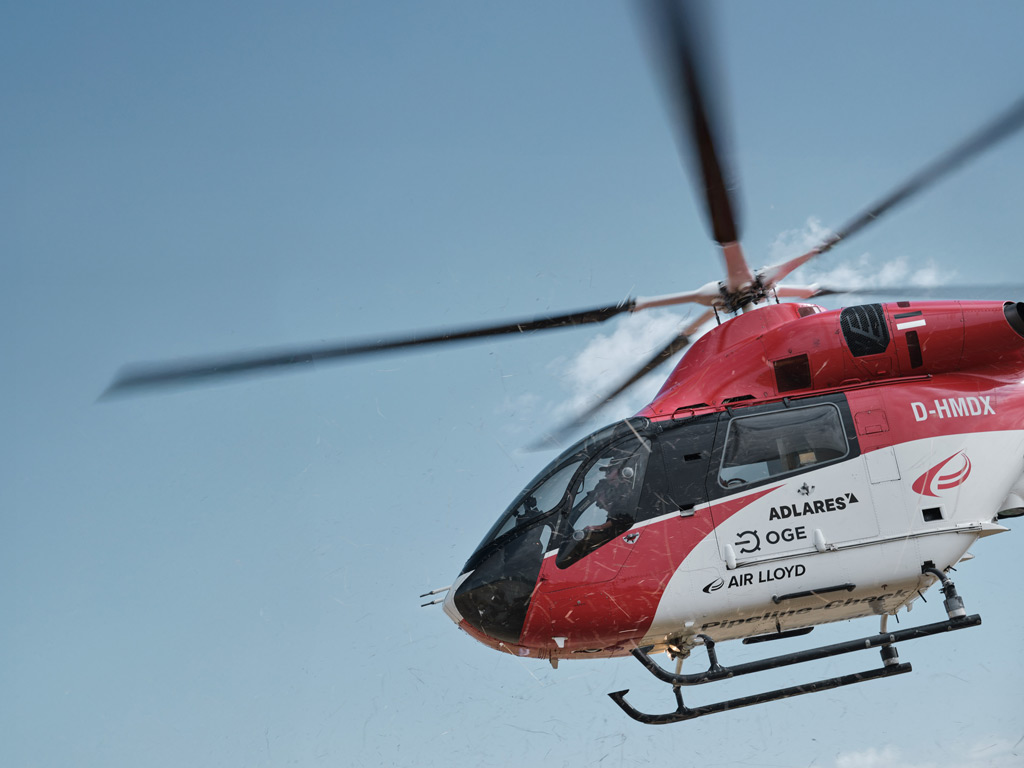
Aerial methane detection, by contrast, uses aircraft-mounted laser systems to survey pipeline corridors from altitudes of 100 to 180 metres at speeds that can reach 165 km/h or more. Rather than imaging a visible plume, airborne systems use techniques such as Differential Absorption LIDAR (DIAL) to measure methane concentrations across a wide scan swath on either side of the pipeline route. This approach is designed for high-efficiency screening of long-distance transmission networks, not for close-up component-level inspection. Aerial inspection is also very efficient when it comes to inspection of compressor stations, metering and control stations, and storage facilities. A helicopter based inspection delivers the source localization as well as the quantification of the total emission of the site and the contribution of each source. Especially large numbers of smaller stations can be monitored very cost-effectively.
The two methods also differ in their regulatory classification. OGI cameras are suited to Type-1 inspections under the EU Methane Regulation, with a detection threshold of 17 g/h. More sensitive airborne laser systems can qualify for Type-2 inspections, which require a detection threshold of 5 g/h (or 1,000 ppm local concentration). Because Type-2 inspections use more capable technology, operators who invest in them are rewarded with longer inspection intervals, specifically a three-year cycle for underground pipelines, creating a genuine economic incentive to adopt better technology.
In short, OGI and aerial detection are complementary, not competing. Aerial surveys screen large pipeline networks efficiently and identify anomaly zones. Ground-based methods, including OGI cameras and handheld instruments, then confirm and characterise individual sources in the areas flagged by the aerial survey. This two-step approach is exactly what the EU Methane Regulation’s LDAR methodology envisions.
What are the limitations of optical gas imaging?
OGI cameras are powerful tools within their intended application, but they come with real constraints that operators should understand before relying on them as their primary leak detection method.
- Range and coverage: OGI cameras work at close range. Surveying long stretches of buried pipeline on foot is slow, labour-intensive, and impractical for transmission networks spanning hundreds of kilometres.
- Detection threshold: The 17 g/h sensitivity of OGI cameras meets Type-1 requirements but falls well short of the 5 g/h threshold required for Type-2 inspections. Smaller leaks may go undetected.
- Environmental sensitivity: OGI performance depends on thermal contrast between the leaking gas and its surroundings. In low-wind, low-temperature-contrast conditions, smaller leaks can be difficult to visualise reliably.
- Qualitative output: Without additional measurement tools, OGI cameras cannot quantify emission rates. Operators who need to report emissions in grams per hour or tonnes per year require supplementary instrumentation.
- Underground leaks: Because OGI cameras detect gas in the air above a surface, they are not well suited to detecting leaks from buried pipelines unless gas has already migrated to the surface in sufficient concentrations. Underground plumes widen and shift as gas travels through soil, meaning the surface signal may not appear directly above the leak.
These limitations do not make OGI cameras the wrong choice. They make them the right choice for specific tasks, particularly site-level LDAR surveys of above-ground components, while pointing to the need for other technologies when the inspection target is a buried transmission pipeline.
Which gas leak detection method is best for large pipeline networks?
For large-scale pipeline networks, particularly buried high-pressure transmission lines, the most effective approach combines high-sensitivity aerial screening with targeted ground-level follow-up. No single technology covers every scenario equally well, but for the initial screening phase across hundreds or thousands of kilometres, airborne laser detection systems offer clear advantages in speed, coverage, and sensitivity.
Research from METEC (Methane Emissions Technology Evaluation Center) and the Engler-Bunte Institute confirms that underground gas plumes do not always emerge directly above the leak point. Gas migrates through soil, and the surface signal can appear metres away from the actual leak location, spread across a wider area than a simple line survey would capture. Reliable detection therefore requires a measurement grid that extends at least 10 metres on either side of the pipeline centreline, with spatial resolution better than 2 metres, and per-point sensitivity well above the 1,000 ppm detection threshold.
These requirements are difficult to meet with ground-based OGI cameras or handheld instruments when surveying long rural corridors. Aerial systems that produce a dense grid of measurements across the full pipeline corridor are far better matched to this task. For the dense urban distribution grid, on-foot or vehicle-based surveys remain practical and effective. The right answer for most operators is not one method or the other, but a structured combination aligned with the two-step LDAR methodology that regulators increasingly expect.
How ADLARES supports your gas leak detection programme
We provide airborne methane detection services built around our CHARM® technology, the world’s only DVGW-certified system for aerial inspection of underground gas pipelines. If your network includes long-distance transmission lines or rural connection corridors that need to be surveyed efficiently and to a high standard of sensitivity, our services are designed precisely for that challenge.
Here is what working with us looks like in practice:
- Type-2 compliant aerial surveys: CHARM® is certified to detect leaks at approximately 110 g/h under real operating conditions, well within the 5 g/h equivalent threshold for Type-2 inspections under the EU Methane Regulation, and qualifying for the extended three-year inspection interval on underground pipelines.
- High-speed coverage: Our helicopter-mounted system surveys at up to 180 km/h at altitudes of 100 to 150 metres, covering large networks quickly and cost-effectively.
- Dense measurement grid: With 1,000 measurement points per second, a scan swath of up to 30 metres, and spatial resolution better than 2 metres, CHARM® produces the kind of grid coverage that underground plume research shows is necessary for reliable detection.
- Secure results delivery: Survey results are delivered through a secure Web GIS platform, accessible on desktop and mobile, so your team can verify indications and plan follow-up ground inspections without delay.
- Over 250,000 km inspected: We have conducted aerial pipeline inspections across Europe for more than 15 years, with a track record that includes co-development with Open Grid Europe, one of Europe’s largest transmission system operators.
If you are planning your next inspection cycle or evaluating how to meet EU Methane Regulation requirements, we would be glad to discuss your network and how aerial detection fits into your LDAR programme. Get in touch with our team to start the conversation.
Dieser Inhalt wurde mithilfe von KI erstellt und kann Fehler enthalten.