
Methane is one of the most discussed molecules in climate science, yet many people still think of carbon dioxide as the primary driver of global warming. That assumption is understandable given how much attention CO2 receives, but it overlooks a gas that punches far above its weight in terms of short-term climate damage. Understanding why methane is so harmful, how long it lingers, and why cutting it quickly matters is essential context for anyone working in energy, infrastructure, or environmental policy in 2026.
Why is methane considered a potent greenhouse gas?
Methane (CH4) is a greenhouse gas because it absorbs infrared radiation emitted by the Earth’s surface and re-radiates it as heat, preventing that energy from escaping into space. What makes methane particularly powerful is the structure of its molecule. CH4 absorbs radiation across wavelength bands that CO2 does not cover as effectively, meaning the two gases trap heat through partially different mechanisms and together create a compounding warming effect.
Beyond its molecular properties, methane is also released in large quantities through human activity. Fossil fuel operations, agriculture, and waste management all produce significant CH4 emissions. Because the gas is both molecularly efficient at trapping heat and abundant in the atmosphere as a result of these sources, it contributes disproportionately to the greenhouse effect relative to the volume emitted.
How much more warming does methane cause than CO2?
The standard measure used to compare greenhouse gases is the Global Warming Potential (GWP), which expresses how much heat a gas traps over a given time period relative to the same mass of CO2. Over a 100-year period, methane has a GWP of approximately 28 to 30, meaning one tonne of methane traps as much heat as roughly 28 to 30 tonnes of CO2 over a century.
Over a shorter 20-year window, the comparison becomes even more stark. Methane’s GWP over 20 years is estimated at around 80 to 86, reflecting the fact that it is far more active in the atmosphere during the period immediately after it is released. This distinction matters enormously for near-term climate targets. If the goal is to limit warming within the next two to three decades, cutting methane delivers a much faster climate return than an equivalent reduction in CO2.
How long does methane stay in the atmosphere?
Methane has a relatively short atmospheric lifetime of approximately 9 to 12 years, compared to CO2, which can persist for centuries to millennia. This short lifespan is both a strength and a source of urgency. Because CH4 breaks down relatively quickly, reducing emissions today produces a measurable reduction in atmospheric concentration within a decade or two. The feedback is fast enough to influence the climate trajectory before mid-century targets come due.
The breakdown process primarily involves methane reacting with hydroxyl radicals (OH) in the troposphere, converting it into CO2 and water vapour. While this means the methane itself disappears, it does leave behind CO2 as a byproduct, which is one reason why eliminating methane leaks rather than simply burning them off is preferable from a long-term climate perspective.
What are the main sources of methane emissions?
Methane emissions come from both natural and human-driven sources. Natural sources include wetlands, which are the single largest natural emitter, as well as permafrost thaw, termites, and geological seepage. However, human activity accounts for roughly 60 percent of total global methane emissions, making it the dominant driver of rising atmospheric concentrations since the industrial era.
The main human-driven sources include:
- Fossil fuel operations: Oil and gas extraction, processing, and transmission release methane through leaks, venting, and incomplete combustion. Coal mining also releases significant quantities of trapped CH4.
- Agriculture: Livestock, particularly cattle, produce methane during digestion through a process called enteric fermentation. Rice cultivation in flooded paddies is another major agricultural source.
- Waste management: Landfills generate methane as organic material decomposes in low-oxygen conditions. Wastewater treatment is a smaller but still significant contributor.
Within the energy sector, pipeline leaks are a particularly important target because the methane being lost is a commercially valuable product. Detecting and repairing those leaks therefore has both environmental and economic benefits, which is why pipeline leak detection services have become a central part of regulatory compliance strategies across Europe.
Why does reducing methane matter more urgently than cutting CO2?
Given methane’s short atmospheric lifetime and its high warming potential over 20 years, cutting CH4 emissions is one of the fastest levers available to slow near-term warming. CO2 reductions are essential for long-term climate stability, but their effect on atmospheric concentrations builds slowly because CO2 accumulates over such long timescales. Methane reductions, by contrast, begin showing up in the atmosphere within years.
This makes methane reduction particularly valuable for meeting the targets set under the Paris Agreement for 2030 and 2035. The Intergovernmental Panel on Climate Change has consistently highlighted rapid methane abatement as one of the most cost-effective near-term strategies available. In the energy sector specifically, a significant share of methane emissions comes from equipment failures and infrastructure leaks that are technically preventable, which means the mitigation potential is high relative to other sectors.
The EU recognised this urgency when it introduced the EU Methane Regulation (Regulation EU 2024/1787), which entered into force on 4 August 2024 as part of the „Fit for 55“ climate package. It is the first EU legislation targeting direct methane emissions from the oil, gas, and coal sectors, and it requires operators to move away from estimate-based emission accounting toward direct, source-level measurement of individual leaks. The first reporting cycle began in 2025, with a staged set of obligations running through to 2030.
How is methane detected and monitored to reduce emissions?
Effective methane monitoring requires technology that can locate leaks reliably across large infrastructure networks, not just confirm that emissions exist somewhere in a general area. Research from institutions such as METEC and the Engler-Bunte Institute has shown that underground pipeline leaks produce gas plumes that widen and shift before reaching the surface, meaning the visible emission at ground level may appear several metres away from the actual leak point. Any detection system must therefore scan a grid extending at least 10 metres on either side of the pipeline centreline, with spatial resolution better than 2 metres, to be genuinely reliable.
The EU Methane Regulation formalises this distinction by separating inspection requirements into two classes. Type-1 inspections require a detection threshold of 17 g/h (or 7,000 ppm local concentration), a level achievable with optical gas imaging cameras and handheld instruments. Type-2 inspections require a more sensitive threshold of 5 g/h (or 1,000 ppm), which demands more sophisticated equipment. Operators using Type-2 certified technology benefit from longer inspection intervals, with underground pipelines requiring a survey only once every three years rather than more frequently under Type-1 protocols.
Airborne detection systems have become a leading approach for covering large pipeline networks efficiently. Flying at altitude, these platforms can survey hundreds of kilometres per day while maintaining the spatial coverage and sensitivity needed to meet Type-2 requirements. The results are typically delivered through digital reporting platforms that allow grid operators to review findings, prioritise repairs, and maintain the 10-year leak records required under the regulation. For operators looking to understand what compliant aerial inspection looks like in practice, the ADLARES homepage provides a clear overview of how this technology is deployed across European gas networks.
How ADLARES helps reduce methane emissions from gas infrastructure
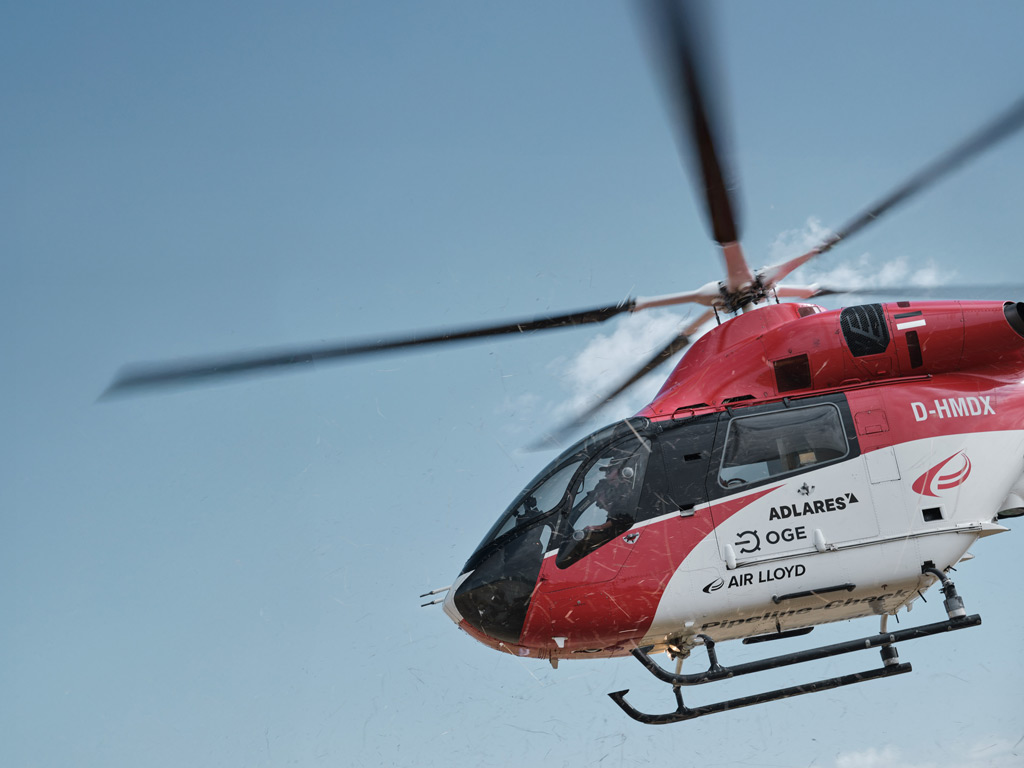
We have been providing airborne methane detection services commercially since 2008, and to date we have inspected over 250,000 km of gas pipelines across Europe. Our CHARM® (CH4 Airborne Remote Monitoring) technology uses the Differential Absorption LIDAR (DIAL) method to detect methane remotely from a helicopter flying at 100 to 150 metres altitude at speeds of up to 180 km/h. With a measurement rate of 1,000 points per second, CHARM® can register leakage rates from as low as 150 l/h even at wind speeds of up to 24 km/h.
CHARM® is the world’s only DVGW-approved gas remote detection system, and it is certified to meet the EU Methane Regulation’s Type-2 sensitivity requirements, giving operators a clear compliance pathway under the current „best available technology“ standard set by Article 14(7). Here is what working with us delivers:
- Full grid coverage: Our scan swath extends well beyond the pipeline centreline, meeting the spatial resolution requirements established by METEC and Engler-Bunte Institute research.
- Type-2 compliance: CHARM® meets the 5 g/h detection threshold required for Type-2 inspections, enabling operators to qualify for the three-year inspection interval on underground pipelines.
- Secure digital reporting: Survey results are delivered via a secure Web GIS platform, accessible on desktop and mobile, so grid operators can verify findings and act on gas indications efficiently.
- Source-level quantification: Beyond leak detection, we provide site-level emission quantification to support the source-level reporting obligations required for OGMP 2.0 Level 5 by August 2028.
- Experienced team: Our specialists bring decades of combined expertise in airborne LIDAR, regulatory compliance, and gas infrastructure. You can learn more about the people behind our technology on the ADLARES team page.
If your organisation needs to meet its EU Methane Regulation obligations or wants to understand how airborne Type-2 inspection can reduce both emissions and long-term survey costs, contact us today to discuss your network and how we can help.
Dieser Inhalt wurde mithilfe von KI erstellt und kann Fehler enthalten.